Plus-Plus vs LEGO Classic for Open-Ended Building Play
Which open-ended building toy fits better for independent play, mixed-age creativity, and flexible building sessions?
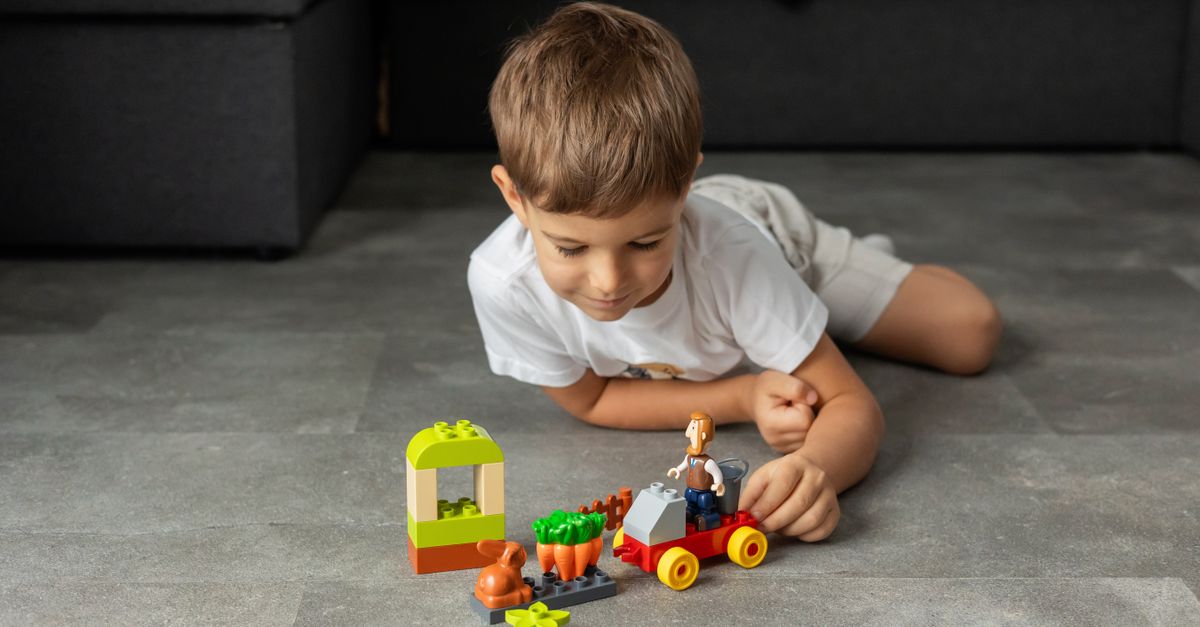
Snapshot
| Toy | Age | Price | Best for | Link |
|---|---|---|---|---|
| Plus-Plus Big Building Set | 5+ | CAD $20–$35 | Fine-motor creative focus | Check Price |
| LEGO Classic Medium Creative Brick Box | 4+ | CAD $35–$65 | Structured creativity that scales with age | Check Price |
Affiliate links. Prices can change.
Plus-Plus and LEGO Classic both sit in the same useful family: screen-free, open-ended building toys that can be used for quick creative play or longer independent projects. They are not electronic, they do not need an app, and they can work for more than one age if the child likes making things.
The choice is not “which toy is smarter?” Both are good. The better question is which building style your child will repeat after the first exciting day. Plus-Plus is more compact, pattern-based, and fine-motor heavy. LEGO Classic is more familiar, more expandable, and better for kids who like tiny worlds, vehicles, and stories.
This is a two-toy comparison. The goal is not to list every nearby toy; it is to make the better choice between these two.
These belong together because both are screen-free open-ended building toys with strong replay value and similar creative-play use cases.
Quick Answer
- Choose Plus-Plus Big Building Set if your child likes quiet tabletop focus, patterns, flat-to-3D designs, and compact building sessions.
- Choose LEGO Classic Medium Creative Brick Box if your child likes vehicles, houses, characters, pretend worlds, and builds that can grow into a larger LEGO system.
- For travel, restaurants, and small-space play, Plus-Plus is usually easier to contain.
- For long-term expansion and mixed LEGO play, LEGO Classic has the deeper ecosystem.
Comparison Table
| Decision point | Plus-Plus Big Building Set | LEGO Classic Medium Creative Brick Box |
|---|---|---|
| Best fit | Patient builders who like patterns, mosaics, and precise hand work | Kids who like vehicles, houses, stories, and familiar brick building |
| Learning style | Fine-motor control, visual planning, symmetry, persistence | Spatial reasoning, sequencing, pretend play, categorizing, design revision |
| First-session win | Slower for some kids; the single-shape system takes a few minutes to click | Faster if the child already knows LEGO; slower if too many pieces are dumped out |
| Setup friction | Low space needs, but small pieces need a tray or pouch | More pieces and more cleanup unless you limit the starting pile |
| Parent involvement | Helpful at first for showing how pieces connect sideways and flat | Helpful for sorting, prompts, and avoiding “where is the piece?” frustration |
| Best long-term use | Quiet focus sessions, patterns, small builds, travel play | Expanding builds, small-world stories, vehicles, and multi-day projects |
The Two Picks
Fine-motor creative focus
Pros
- ✓ Compact
- ✓ Quiet tabletop use
- ✓ Strong concentration
Cons
- ✗ Smaller pieces
- ✗ Learning curve
- ✗ Can frustrate younger kids
Structured creativity that scales with age
Pros
- ✓ Huge replay value
- ✓ Scales with age
- ✓ Great imagination tool
Cons
- ✗ Cleanup friction
- ✗ Stepping hazard
- ✗ Can overwhelm if too many pieces out
What Makes These Toys Different
Plus-Plus is built around one repeated shape. At first that can seem limiting, but the limit is the point. Kids learn how the pieces connect flat, sideways, in rows, and eventually into 3D shapes. The toy rewards patience and pattern spotting more than fast pretend play. A child might build a rainbow, a sword, a tiny animal, a bracelet-like strip, or a pixel-style character. The learning is in the hand control and the revision: press, test, remove, rotate, try again.
LEGO Classic is broader. It gives kids bricks, wheels, windows, eyes, plates, and shapes that immediately suggest vehicles, houses, creatures, shops, robots, and machines. The play can start with an idea instead of a pattern. That makes LEGO more accessible for some kids, especially if they have seen older siblings or friends use it. It also means the play can sprawl. One small car becomes a garage, then a road, then a whole city on the floor.
The practical difference is focus style. Plus-Plus narrows the play so the child can settle into quiet making. LEGO opens the play up so the child can invent a world.
Which One Is Easier to Start?
LEGO Classic is usually easier if your child already understands LEGO. The bricks snap together in familiar ways, and the box often includes enough obvious pieces to make a car, house, animal, or little scene. The risk is choice overload. If you pour the whole box onto the table, a younger child may spend more time searching than building.
Plus-Plus can need a short demonstration. Many kids try to stack the pieces like blocks, then get annoyed when the system does not behave that way. A parent can make the first session smoother by building one flat square, one little ladder shape, and one tiny 3D cube. Once the child sees the connection logic, Plus-Plus becomes much more independent.
For a fast first win, LEGO has the edge. For a calm tabletop rhythm after the child learns the system, Plus-Plus can be easier to manage.
Fine Motor, Focus, and Frustration
Plus-Plus asks for more precise finger work. That is useful for kids who benefit from fine-motor practice, but it also means it is not the best choice for every frustrated builder. The pieces are small, the joins require pressure, and some designs fall apart if the child rushes. It works best for kids who can handle a bit of trial and error.
LEGO also builds fine-motor skill, but the pieces offer more sizes and more obvious connection points. A frustrated child can switch from building a detailed thing to making a simple tower or car. That flexibility can save the session. On the other hand, LEGO frustration often comes from missing pieces, hard-to-separate bricks, or a plan that depends on one exact part.
If your child likes careful hand work, Plus-Plus is a strong fit. If your child needs more forgiving ways to recover from a failed idea, LEGO is usually safer.
Cleanup and Storage Reality
Both toys need a container. Plus-Plus pieces are smaller than standard LEGO bricks and can disappear into rugs, car seats, backpacks, and couch seams. The upside is that a small set takes very little space. A pencil case, lidded snack container, or shallow tray can make it a good travel or restaurant toy for kids old enough to manage the pieces safely.
LEGO Classic needs a more serious cleanup system. The pieces spread across a room quickly, and stepping on them is not a joke. A bin works, but a tray or small parts sorter helps more. For younger kids, put out a smaller “today box” instead of the full collection. That keeps the creative range without turning playtime into a floor-wide excavation.
If your home is short on space, Plus-Plus is easier. If you already have a LEGO bin and good cleanup habits, LEGO Classic will fit naturally.
Replay Value Over Time
Plus-Plus has strong replay value when the child enjoys pattern play. The same pieces can become letters, animals, decorations, little tools, flat mosaics, and abstract builds. It is especially good for short sessions: 10 quiet minutes after school, a focused table activity during dinner prep, or a compact toy to bring to a grandparent’s house.
LEGO Classic has stronger ecosystem replay. The medium creative brick box can mix with nearly any future LEGO set. A child can add minifigures, wheels, specialty parts, baseplates, and themed sets over time. That makes LEGO a better long-term platform if you want one toy system to grow with the child.
Neither toy wins for every family. Plus-Plus is better as a compact focus tool. LEGO Classic is better as a long-term creative world.
Where to Go Next
- Magna-Tiles vs LEGO Classic for Open-Ended Play
- Best Fine Motor Toys for Early Elementary Kids
- Screen-Free Toys for Kids
- Best Toys for Kids Who Get Bored Easily
Final Recommendation
Start with Plus-Plus Big Building Set if you want a compact, quiet, fine-motor building toy that works for focused tabletop play. It is the better choice for kids who like patterns, small designs, and the satisfaction of figuring out a simple system deeply.
Choose LEGO Classic Medium Creative Brick Box if your child wants broader pretend play, vehicles, buildings, and a system that can expand for years. It asks more from your storage setup, but it has more long-term runway for kids who love building worlds.
FAQ
Which one is easier to start with?
LEGO Classic is usually easier if the child already knows LEGO. Plus-Plus may need a short parent demo, but it becomes very independent once the child understands how the pieces connect.
Which one has more long-term depth?
LEGO Classic has more ecosystem depth because it mixes with future LEGO sets. Plus-Plus has strong replay value, but the play stays more focused on patterns, small objects, and fine-motor building.
Which one is better for travel?
Plus-Plus is easier for travel because a small set fits in a pouch and works on a tray or table. It is still made of small pieces, so it is better for older kids who can keep track of them.
Which one is better for siblings?
LEGO Classic is better if both kids are old enough to share a bigger building world. Plus-Plus is better when you want each child to work on a small independent design without taking over the other person’s project.
Should I buy both?
Not at first. Start with the system that matches your child’s current play style. Add the other later only if building becomes a repeated interest, not just a one-week novelty.
Want better toy picks without the research rabbit hole?
Get concise recommendations by age, need, and budget.
Where to go next
By age
Best Toys for 4-Year-Olds (Learning Through Play) (2026)
Keep the recommendations age-appropriate for your kid’s stage.
By need
Gifts for Neurodivergent Kids: A Parent's Guide (2026)
Jump to picks focused on ADHD, sensory, and regulation support.
By budget
Best Gifts for Kids Under $25 (2026)
Compare strong options in lower price brackets before you buy.
Related Articles
Best Fine-Motor Toys for Early Elementary Kids
Building, arranging, and hands-on toys that help early elementary kids practise finger control through play.
Read more →
Best Shared Sibling Toys for 6-Year-Olds
Flexible toys siblings can use together around age 6, with fewer arguments and more cooperative play.
Read more →
Magna-Tiles vs LEGO Classic for Open-Ended Play
Which open-ended toy wins for focus, creativity, cleanup, and replay value?
Read more →