Magna-Tiles vs LEGO Classic for Open-Ended Play
Which open-ended toy wins for focus, creativity, cleanup, and replay value?
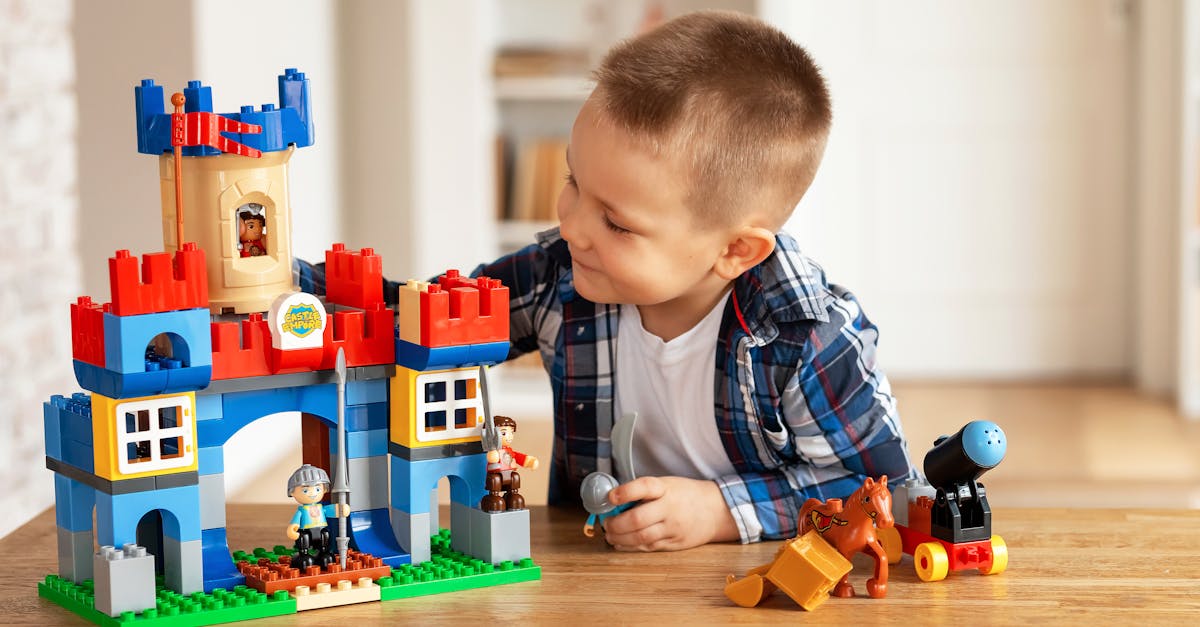
Snapshot
| Toy | Age | Price | Best for | Link |
|---|---|---|---|---|
| Magna-Tiles Clear Colors 32-Piece Set | 3+ | CAD $70–$95 | Open-ended building and creative focus | Check Price |
| LEGO Classic Medium Creative Brick Box | 4+ | CAD $35–$65 | Structured creativity that scales with age | Check Price |
Affiliate links. Prices can change.
Magna-Tiles and LEGO Classic both look like obvious “good toys.” They are open-ended, screen-free, durable, and easy to understand. The real decision is not whether either one is smart enough. It is which one your child will actually reach for on a normal Tuesday.
Magna-Tiles are better for fast visual building, mixed-age play, and kids who like to see a structure appear quickly. LEGO Classic is better for detailed building, tiny-world storytelling, and kids who enjoy sorting, modifying, and returning to a project over time.
This is a two-toy comparison. The goal is not to crown a universal winner. It is to choose the better fit for your home, your child’s patience level, and the kind of play you want more of.
These belong together because both are open-ended building systems for repeat creative play, with overlapping age ranges and a similar role on a family toy shelf.
Quick Answer
- Choose Magna-Tiles if you want faster setup, easier sharing, and big visual structures with less instruction.
- Choose LEGO Classic if your child likes detailed builds, small-world play, vehicles, characters, and longer independent projects.
- For preschoolers or sibling play, Magna-Tiles are usually the smoother first buy.
- For kids who already build patiently, LEGO Classic has more long-term depth.
Comparison Table
| Decision point | Magna-Tiles Clear Colors 32-Piece Set | LEGO Classic Medium Creative Brick Box |
|---|---|---|
| Best fit | Younger or mixed-age kids who build together | Kids who like detail, vehicles, figures, and longer builds |
| Learning style | Spatial reasoning, balance, symmetry, structure | Fine motor planning, imagination, categorizing, construction |
| First-session win | Very fast; kids can build something tall right away | Slower; more sorting and experimenting before the win |
| Cleanup friction | Larger pieces are easier to gather | More small pieces and sorting required |
| Parent involvement | Light prompting, mostly independent | May need help finding pieces or restarting ideas |
| Best long-term use | Fast open-ended builds and shared structures | Deeper imaginative play and build variety |
The Two Picks
Open-ended building and creative focus
Pros
- ✓ Quiet play
- ✓ Long replay value
- ✓ Works solo or together
Cons
- ✗ Higher upfront cost
- ✗ Pieces scatter
- ✗ Needs storage bin
Structured creativity that scales with age
Pros
- ✓ Huge replay value
- ✓ Scales with age
- ✓ Great imagination tool
Cons
- ✗ Cleanup friction
- ✗ Stepping hazard
- ✗ Can overwhelm if too many pieces out
What Makes These Toys Different
Magna-Tiles are satisfying because the build appears almost instantly. A child can place two squares and a triangle together and see a house, tower, ramp, garage, rocket, or “crystal castle” without following instructions. That quick feedback matters for younger kids, kids with lower frustration tolerance, and siblings who need a toy that does not require one person to control the plan.
LEGO Classic asks for more patience. The pieces are smaller, the possibilities are less obvious at first, and some children spend the first few minutes hunting for “the right piece.” But that friction is also part of the learning. LEGO builds fine motor control, categorizing, sequencing, planning, and flexible thinking. It also invites stories: a tiny car, a weird animal, a shop, a spaceship, a house with a door that does not quite fit.
The difference is speed versus depth. Magna-Tiles are better when you want the play to begin immediately. LEGO Classic is better when your child enjoys slowly shaping an idea.
Setup and Parent Involvement
Magna-Tiles are low-instruction. You can dump them on the floor and most kids will know what to do. The magnets make connection feel almost magical, and the larger pieces reduce the fiddly frustration that can derail some building sessions. The tradeoff is space. Tall builds need floor room, and the pieces migrate under couches unless you use a simple bin.
LEGO Classic needs a little more setup discipline. Too many bricks out at once can overwhelm younger kids, especially if they are not already LEGO fluent. A better approach is to put a small tray of pieces on the table and give a light prompt: “Can you build a robot?” or “Can you make a tiny playground?” That keeps the experience creative without turning it into a search-and-rescue mission for one red slope piece.
If you want a calmer first session, Magna-Tiles win. If you are willing to manage the pieces and help shape the first few builds, LEGO rewards the effort.
Which One Is Better for Focus?
Magna-Tiles are better for short, focused bursts. The child can build, knock down, rebuild, and change the design quickly. That makes them useful after school, before dinner, or during a reset window when you want quiet play without a heavy parent lift.
LEGO Classic is better for sustained focus once the child has momentum. It can become a 45-minute project because there are always small decisions to make: colour, shape, wheels, doors, animals, towers, patterns. The catch is that it may take longer to enter that focused state.
For kids who get discouraged easily, start with Magna-Tiles. For kids who already disappear into little worlds, LEGO Classic may hold attention longer.
Creativity and Learning Value
Both toys are legitimately useful. Magna-Tiles build spatial reasoning: balance, symmetry, weight, and cause and effect. Kids learn that a tall tower needs a wider base, that triangles stabilize shapes, and that some ideas look good but collapse immediately. It is gentle engineering without calling it engineering.
LEGO Classic builds a different kind of creativity. It supports design constraints, pretend play, and revision. A child might start with a car, realize it needs a roof, add a weird tower, then turn the whole thing into a police station for cats. That kind of messy iteration is real creative thinking.
If your child likes visual patterns and structures, Magna-Tiles are the stronger match. If they like characters, stories, vehicles, and tiny details, LEGO is the better fit.
Age and Sibling Fit
For ages 3 to 5, Magna-Tiles are usually easier. They are bigger, simpler, and less likely to become a cleanup disaster. They also work well when an older sibling wants to “help” without taking over completely.
For ages 5 to 8, LEGO Classic becomes more interesting. The child has better hand control, more patience, and more capacity to turn a pile of pieces into a plan. LEGO is also easier to expand over time because almost every set can eventually mix into the same bin.
For mixed-age homes, Magna-Tiles are the safer shared toy. For one child who loves building alone, LEGO has more runway.
Replay Value Over Time
Do not only ask which toy looks smarter. Ask which one your child will repeat after the novelty wears off.
Magna-Tiles have strong replay value because the reset is fast. Kids can build a zoo, castle, parking garage, marble ramp, or colour pattern with the same pieces. The risk is that a small 32-piece set can feel limiting once a child wants bigger builds.
LEGO Classic has stronger long-term depth because the system keeps expanding. A basic brick box can mix with future sets, minifigures, wheels, baseplates, and random pieces from birthdays. The risk is clutter. Without storage, LEGO goes from “creative tool” to “floor confetti.”
Where to Go Next
If your child likes the building side of this comparison, you may also want to look at screen-free toys for kids and smart toys with real learning value. If the issue is keeping a restless child engaged, toys for kids who get bored easily is the closer next guide.
Related articles: screen-free toys for kids | smart toys with real learning value | toys for kids who get bored easily
Final Recommendation
Magna-Tiles are the easier first choice for fast, shared, open-ended play. They are especially strong for preschoolers, siblings, and kids who need a quick win before they settle into deeper play.
Pick LEGO Classic if your child already likes detailed building, small-world stories, and projects that can stretch over multiple sessions. It has more long-term depth, but it asks more from the child and the cleanup system.
FAQ
Which one is easier to start with?
Magna-Tiles are easier for most kids because the pieces connect quickly and the structures look impressive right away. LEGO Classic is easier only if the child already knows and enjoys LEGO.
Which one has more long-term depth?
LEGO Classic has more long-term depth because it can expand into a much larger building system. Magna-Tiles still have strong replay value, but the play stays more focused on structures, patterns, and large visual builds.
Which one is better for younger kids?
Magna-Tiles are usually better for ages 3 to 5. The pieces are larger, the magnets reduce frustration, and the play is easier to share.
Which one is better for independent play?
LEGO Classic can support longer independent play for kids who enjoy details. Magna-Tiles are better for independent play when the child needs a lower-friction start.
Should I buy both?
Not at first. Start with the one that fits your child now. Add the other later if building becomes a real interest instead of a short phase.
Want better toy picks without the research rabbit hole?
Get concise recommendations by age, need, and budget.
Where to go next
By age
Best Toys for 4-Year-Olds (Learning Through Play) (2026)
Keep the recommendations age-appropriate for your kid’s stage.
By need
Gifts for Neurodivergent Kids: A Parent's Guide (2026)
Jump to picks focused on ADHD, sensory, and regulation support.
By budget
Best Gifts for Kids Under $25 (2026)
Compare strong options in lower price brackets before you buy.
Related Articles
Plus-Plus vs LEGO Classic for Open-Ended Building Play
Which open-ended building toy fits better for independent play, mixed-age creativity, and flexible building sessions?
Read more →
Best Fine-Motor Toys for Early Elementary Kids
Building, arranging, and hands-on toys that help early elementary kids practise finger control through play.
Read more →
Best Shared Sibling Toys for 6-Year-Olds
Flexible toys siblings can use together around age 6, with fewer arguments and more cooperative play.
Read more →