Best Open-Ended Toys for Shared Sibling Play
Flexible toys siblings can use together across ages without constant conflict.
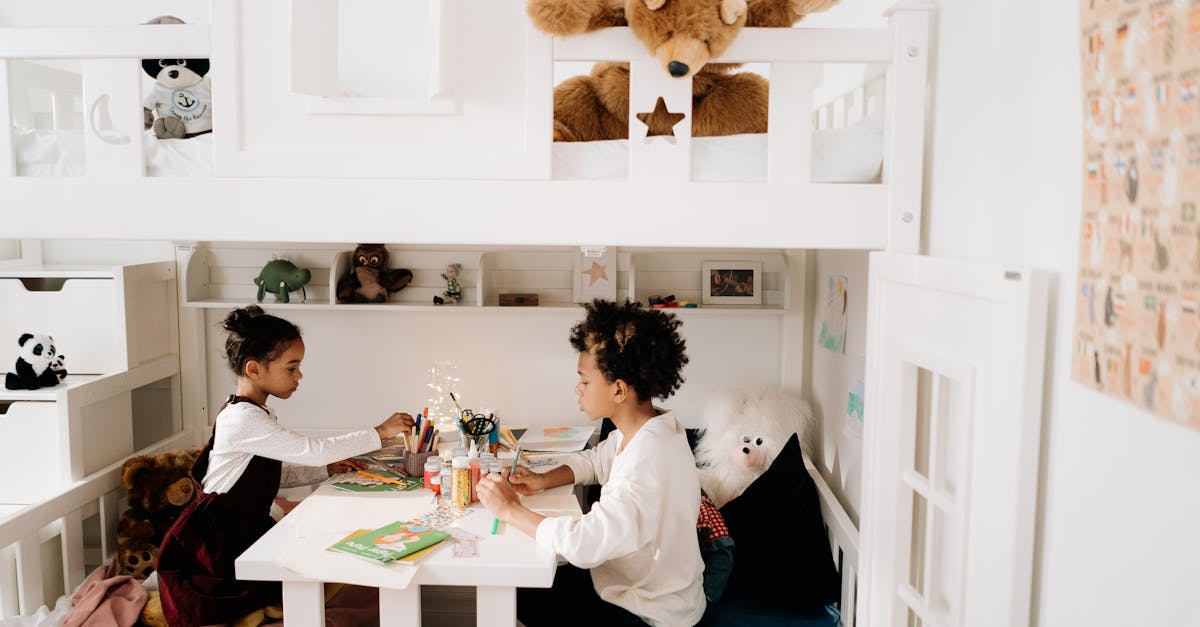
Snapshot
| Toy | Age | Price | Best for | Link |
|---|---|---|---|---|
| #1 Magna-Tiles Classic 100-Piece Set | 3+ | CAD $50–$80 | Open-ended building and creative focus | Check Price |
| #2 LEGO Classic Creative Brick Box | 4+ | CAD $35–$55 | Structured creativity that scales with age | Check Price |
| #3 Grimm's Rainbow Stacker | 1+ | CAD $85–$110 | Loose parts imagination play | Check Price |
| #4 Kinetic Sand Set | 3+ | CAD $25–$45 | Sensory regulation and transitions | Check Price |
Affiliate links. Prices can change.
Shared sibling play works best when the toy does not have one correct owner, one correct answer, or one tiny role everyone fights over.
Open-ended toys help because two children can enter the play from different angles. One builds the tower, one makes the road. One sorts colours, one invents the story. One child needs quiet sensory input, while the other wants to make something big. The best shared toys create enough room for both without requiring an adult referee every three minutes.
Magna-Tiles Classic 100-Piece Set
Reliable engagement, low setup friction, and strong replay value for real family routines.
This guide focuses on toys that can support real sibling routines: before dinner, weekend mornings, rainy afternoons, and those awkward transition windows when everyone is a bit tired. A toy does not need to be perfectly cooperative to make the list, but it does need to offer enough pieces, roles, or flexible use for more than one child.
What to Look For
- Enough pieces for two kids. Shared play falls apart when one child controls the only important part.
- Multiple roles. Builder, designer, sorter, storyteller, tester, and cleanup helper can all be valid roles.
- Low adult dependence. The toy should not require constant instruction once the first setup is done.
- Age stretch. The best sibling toys let a younger child participate while an older child still has depth.
- Manageable cleanup. Open-ended play can create chaos. A bin, tray, or mat makes repeat use more likely.
Our Top Picks
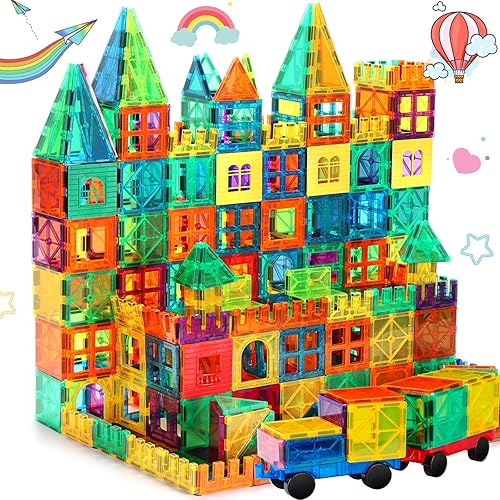
Open-ended building and creative focus
Pros
- ✓ Quiet play
- ✓ Long replay value
- ✓ Works solo or together
Cons
- ✗ Higher upfront cost
- ✗ Pieces scatter
- ✗ Needs storage bin
Structured creativity that scales with age
Pros
- ✓ Huge replay value
- ✓ Scales with age
- ✓ Great imagination tool
Cons
- ✗ Cleanup friction
- ✗ Stepping hazard
- ✗ Can overwhelm if too many pieces out
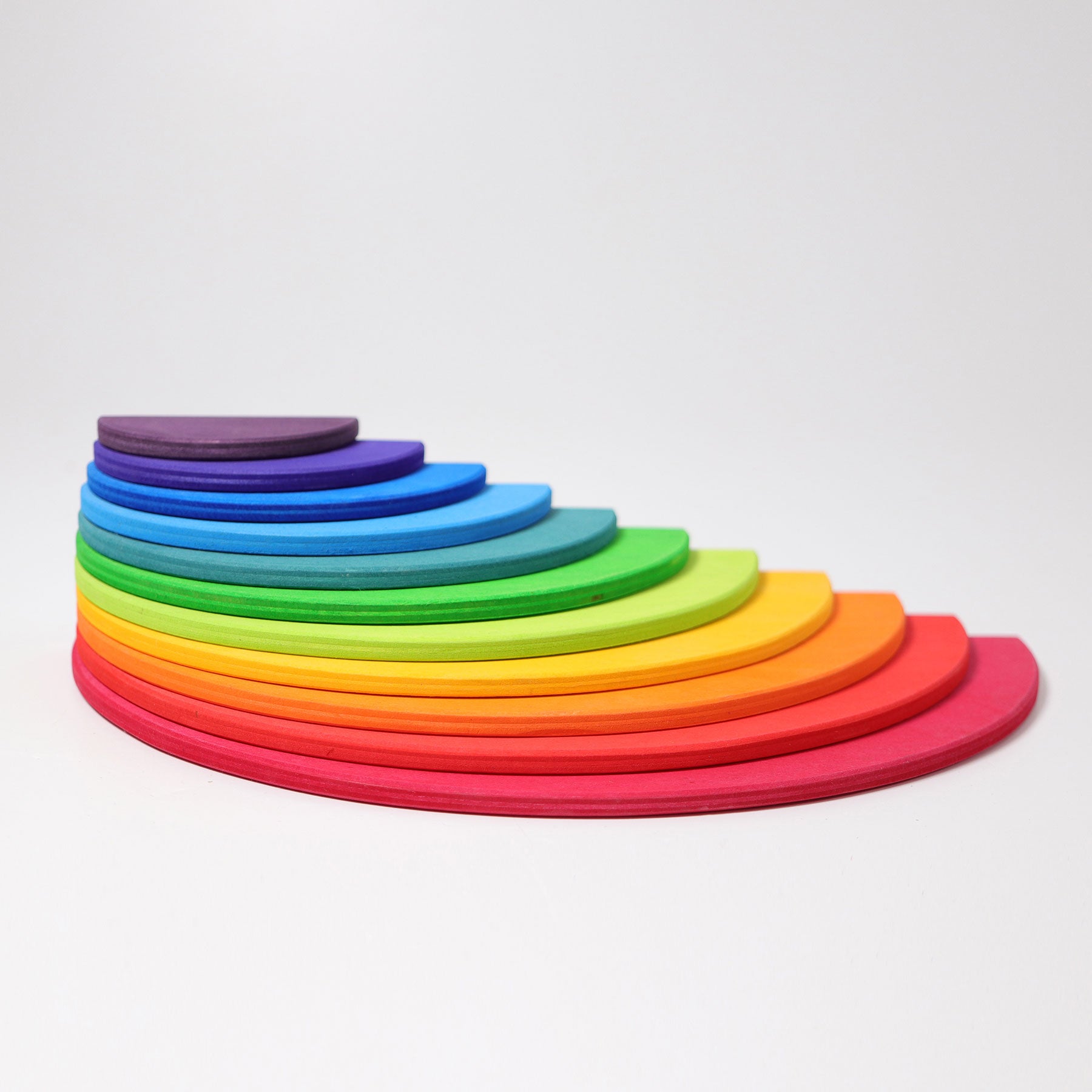
Grimm's Rainbow Stacker
Loose parts imagination play
Pros
- ✓ Beautiful open-ended design
- ✓ Long lifespan
- ✓ Calm play style
Cons
- ✗ Premium price
- ✗ Not for rough use
- ✗ Pieces can go missing
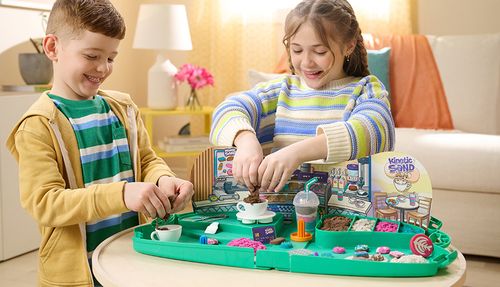
Kinetic Sand Set
Sensory regulation and transitions
Pros
- ✓ Very calming tactile input
- ✓ Low noise
- ✓ Easy start/stop
Cons
- ✗ Can get messy
- ✗ Best with tray
- ✗ Not ideal for carpet
Plus-Plus Big Building Set
Fine-motor creative focus
Pros
- ✓ Compact
- ✓ Quiet tabletop use
- ✓ Strong concentration
Cons
- ✗ Smaller pieces
- ✗ Learning curve
- ✗ Can frustrate younger kids
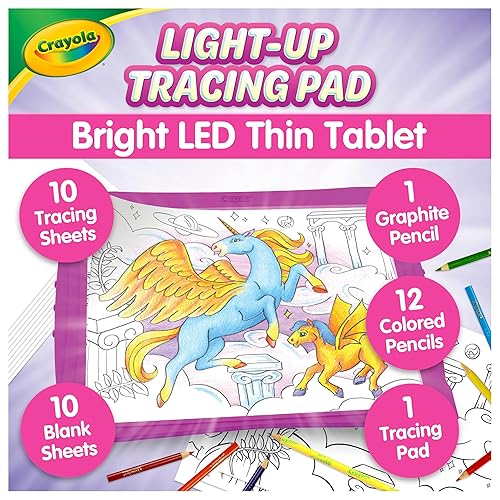
Crayola Light-Up Tracing Pad
Structured creative focus
Pros
- ✓ Low setup
- ✓ Visual rewards
- ✓ Good for focus blocks
Cons
- ✗ Needs batteries
- ✗ Paper management
- ✗ Can lose novelty
Choose by Sibling Dynamic
The right toy depends less on age labels and more on the conflict pattern in your house.
If siblings fight over control, choose a toy with many equivalent pieces. Magna-Tiles, LEGO Classic, and Plus-Plus are better than toys with one remote, one screen, or one hero component. You can split the pieces into two starter piles and still let the builds connect later.
If one child is much younger, choose toys with safe, simple participation. Magna-Tiles and Grimm's Rainbow Stacker work well because a younger child can stack, sort, or pass pieces while an older child builds something more elaborate. LEGO can work across ages too, but only if small pieces are safe for the youngest child in the room.
If the house gets loud fast, choose a quieter sensory or building toy. Kinetic Sand can help siblings settle into parallel play, especially if each child has a tray. It is not mess-free, but it can be calmer than pretend play that escalates into running, shouting, and arguing.
If one child wants structure and the other wants freedom, combine roles. With Magna-Tiles, one child can follow a picture idea while the other makes animals, roads, or rooms. With LEGO, one child can build from the booklet and the other can make accessories. The adult job is to name both roles as legitimate so the structured child does not police the open-ended child.
Why These Picks Made the List
Magna-Tiles Classic 100-Piece Set
Magna-Tiles are the strongest overall pick because they are simple enough for young children and still satisfying for older kids. The magnetic feedback reduces frustration: pieces click together quickly, buildings grow fast, and collapses are usually easy to rebuild.
They are especially good for shared play because the roles are flexible. One child can build walls while another adds windows. One can make a garage while another makes cars or roads. A parent can set a soft challenge — “Can you build a zoo together?” — without turning the play into a lesson.
The main drawback is price. A larger set matters for siblings because too few tiles creates ownership fights. If the budget allows only one open-ended building toy, this is the safest first buy.
LEGO Classic Creative Brick Box
LEGO Classic has enormous replay value, but it needs boundaries to work well for siblings. Too many bricks dumped on the floor can overwhelm kids and make cleanup miserable. A smaller sorted tray often works better than the whole box.
It is a strong fit when at least one child enjoys detailed building. The other child can still participate by sorting colours, choosing pieces, building scenery, or making simple vehicles. For a deeper building comparison, see Magna-Tiles vs LEGO Classic for Open-Ended Play.
Grimm's Rainbow Stacker
Grimm's Rainbow Stacker is calmer and more design-led than many plastic building toys. It can become tunnels, fences, towers, pretend-play scenery, colour-sorting pieces, or loose-parts art.
Its biggest strength is age stretch. Toddlers can stack and nest the arcs, while older siblings can use them as landscape pieces in larger pretend worlds. The premium price is the obvious downside, so it makes the most sense for families who value beautiful, long-lasting loose parts.
Kinetic Sand Set
Kinetic Sand is not the cleanest toy on this list, but it can be very useful for siblings who need a lower-noise reset. It gives tactile input without requiring competition, scoring, or winning.
For shared use, the setup matters. Use two trays or one large tray with clear zones. Give each child a tool, cutter, mould, or role. Avoid carpet. Keep a small handheld vacuum or brush nearby so cleanup does not become the reason the toy disappears forever.
Plus-Plus Big Building Set
Plus-Plus is excellent for compact tabletop building. It is quieter than LEGO, easier to store, and good for kids who like patterns, mosaics, and small inventions.
The learning curve is real. Younger siblings may need help at first because the pieces connect in a particular way. Once they understand it, Plus-Plus can become a strong restaurant-table, grandparent-house, or rainy-day toy. If your family is choosing between Plus-Plus and bricks, Plus-Plus vs LEGO Classic for Open-Ended Building Play is the more specific comparison.
Crayola Light-Up Tracing Pad
The tracing pad is the least naturally shared toy here because it has one main work surface. It still earns a place for families where siblings do well with side-by-side creative stations: one child traces, one colours finished pages, one chooses the next image, or they take short turns.
Do not buy it as the main “together” toy if your children fight over turns. Buy it as a quiet creative station for older siblings, or pair it with a second drawing surface so nobody has to wait too long. For broader screen-free creative options, see Screen-Free Toys for Kids.
Simple Rules That Reduce Sibling Conflict
1) Split starter pieces before play begins
Give each child a small pile, tray, or zone before anyone starts building. They can trade later, but the first minute matters. If one child grabs all the best pieces immediately, the conflict has already started.
2) Name different jobs
Try “builder and designer,” “road maker and house maker,” “sorter and tester,” or “shopkeeper and customer.” Siblings often cooperate better when they do not have to do the exact same thing at the exact same time.
3) Use a shared build base
A mat, tray, table, or baseplate gives the play a boundary. It also makes cleanup easier because the project has a home. Open-ended toys feel less chaotic when kids know where the play belongs.
4) Keep the adult role small
Set the first prompt, then step back. If you narrate every decision, the children may start competing for your approval instead of building with each other.
5) End with a photo or display shelf
Some sibling fights happen because one child wants to clean up and the other wants to protect the build. A quick photo or temporary shelf can make cleanup feel less like destruction.
Best First Choice by Household
For mixed ages, start with Magna-Tiles. They are simple, sturdy, and flexible.
For kids who love detailed builds, start with LEGO Classic or Plus-Plus.
For calmer sensory play, start with Kinetic Sand and use trays from the beginning.
For a Montessori-style playroom or pretend-world setup, Grimm's Rainbow Stacker is the more beautiful long-term piece.
For quiet solo-to-side-by-side art, the Crayola Light-Up Tracing Pad can work, but it should not be your only sibling-play option.
Want better toy picks without the research rabbit hole?
Short, practical recommendations by age, need, and budget.
FAQ
What makes a toy good for shared sibling play?
A good shared toy has enough materials, multiple roles, and no single correct outcome. It should let kids play together, separately beside each other, or switch between both.
Are open-ended toys better than games for siblings?
Not always, but they are often easier for mixed ages. Board games can create winner-loser tension or require reading. Open-ended toys let siblings participate at different skill levels.
What if my kids still fight over the same pieces?
Pre-split the materials, create zones, and keep a small “special pieces” bowl for trading. If one piece causes repeated conflict, remove it for that session instead of letting it dominate the play.
Which pick is best for small spaces?
Plus-Plus is the easiest to store. Magna-Tiles also store well in a bin, but the builds need more surface area. Kinetic Sand needs the most cleanup boundary.
Which pick is best if one child has big feelings?
Magna-Tiles and Kinetic Sand are the best starting points. Magna-Tiles rebuild quickly after a collapse, and Kinetic Sand can provide calming tactile input. For more regulation-focused ideas, see Calm Toys for Kids with Big Feelings.
Related reads
- Magna-Tiles vs LEGO Classic for Open-Ended Play
- Plus-Plus vs LEGO Classic for Open-Ended Building Play
- Best Building Toys Beyond LEGO
- Screen-Free Toys for Kids
- Calm Toys for Kids with Big Feelings
If You Can Only Buy One
Magna-Tiles Classic 100-Piece Set is the safest first choice for shared sibling play.
It offers enough flexibility for different ages, enough structure to prevent total chaos, and enough replay value to keep showing up in everyday family routines.
Want better toy picks without the research rabbit hole?
Get concise recommendations by age, need, and budget.
Where to go next
By age
Best Toys for 4-Year-Olds (Learning Through Play) (2026)
Keep the recommendations age-appropriate for your kid’s stage.
By need
Gifts for Neurodivergent Kids: A Parent's Guide (2026)
Jump to picks focused on ADHD, sensory, and regulation support.
By budget
Best Gifts for Kids Under $25 (2026)
Compare strong options in lower price brackets before you buy.
Related Articles
Plus-Plus vs LEGO Classic for Open-Ended Building Play
Which open-ended building toy fits better for independent play, mixed-age creativity, and flexible building sessions?
Read more →
Best Fine-Motor Toys for Early Elementary Kids
Building, arranging, and hands-on toys that help early elementary kids practise finger control through play.
Read more →
Best Shared Sibling Toys for 6-Year-Olds
Flexible toys siblings can use together around age 6, with fewer arguments and more cooperative play.
Read more →