Best Building Toys for Kids (Beyond LEGO) (2026)
10 building toys that aren't LEGO but are just as good. Magnetic, wooden, engineering, and construction sets for ages 3-12.
Snapshot
| Toy | Age | Price | Best for | Link |
|---|---|---|---|---|
| Magna-Tiles (100 Piece Set) | 3+ | CAD $120–$160 | All-around best building toy for younger kids | Check Price |
| Magformers (62 Piece Set) | 3+ | CAD $90–$120 | Kids who want more geometric variety than Magna-Tiles | Check Price |
| KAPLA Planks (200 Piece Box) | 3+ | CAD $50–$80 | Precision builders and patient architects | Check Price |
| K'Nex Building Set (300+ pieces) | 7+ | CAD $25–$45 | Kids who want to build things that MOVE | Check Price |
Affiliate links. Prices can change.
LEGO is great. We all know that. But it's not the only building toy worth owning, and for some kids it's not even the best one.
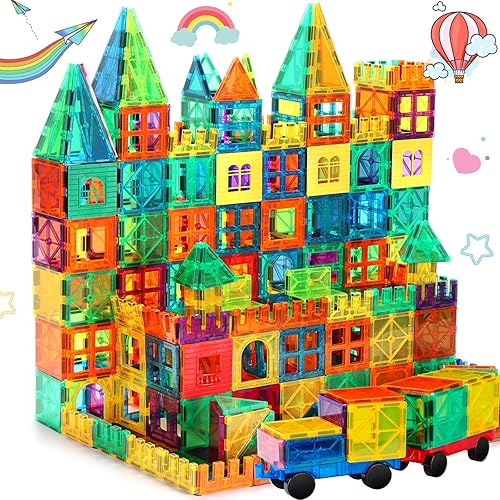
Magna-Tiles (100-Piece)
Magnetic geometry that clicks together in seconds. No instructions needed. Every build is freeform, and they never stop playing with them.
Some kids want bigger pieces. Some want magnets. Some want things that move, flex, or connect in ways that plastic bricks can't. This list covers the best alternatives across every age and building style.
What to Look For
- Connection type matters. Magnetic, snap, interlock, friction. Each feels different and teaches different spatial skills.
- Piece count vs. piece quality. 500 flimsy pieces are worse than 50 solid ones.
- Open-ended potential. Can they build anything, or just one thing?
- Compatibility. Sets that expand or combine with other sets give you more value over time.
Our Top Picks
All-around best building toy for younger kids
Pros
- ✓ Magnetic click is addictive
- ✓ Flat pieces build 3D structures
- ✓ Translucent colours are beautiful
Cons
- ✗ Expensive per piece
- ✗ Magnets can weaken over time
- ✗ Flat surfaces only
Magna-Tiles appear on almost every toy list for a reason. They click together with magnets and let kids build towers, houses, pyramids, and abstract structures. The translucent colours look incredible near windows. For ages 3-8, this is the single best building toy you can buy. Period.
Kids who want more geometric variety than Magna-Tiles
Pros
- ✓ Stronger magnets than Magna-Tiles
- ✓ More shape variety (pentagons, trapezoids)
- ✓ Pieces spin within frames
Cons
- ✗ Not compatible with Magna-Tiles
- ✗ More expensive per piece
- ✗ Fewer expansion options
The main competitor to Magna-Tiles. Magformers have stronger magnets and more geometric shapes. The pieces rotate within their frames, which creates interesting building possibilities Magna-Tiles can't do. If your kid already has Magna-Tiles and wants more, Magformers isn't a duplicate. It's a different building experience.
Precision builders and patient architects
Pros
- ✓ Single shape, infinite possibilities
- ✓ Teaches balance, patience, and physics
- ✓ Beautiful pine wood construction
Cons
- ✗ Frustrating when structures collapse
- ✗ Only one shape (that's also the point)
- ✗ Expensive for wooden planks
Two hundred identical wooden planks. No connectors, no magnets, no clicks. Just gravity and patience. KAPLA builds are engineering in its purest form. Every structure relies on balance and precision. When a tower falls (and it will), your kid learns about weight distribution and tries again. Used in Montessori schools worldwide.
Kids who want to build things that MOVE
Pros
- ✓ Rods and connectors build 3D structures
- ✓ Wheels, gears, and axles included
- ✓ Builds things that actually move
Cons
- ✗ Connectors can be hard to push together
- ✗ Instructions needed for complex builds
- ✗ Pieces scatter everywhere
Where LEGO builds static structures, K'Nex builds moving ones. Ferris wheels, cars, cranes, bridges. The rod-and-connector system creates a skeletal framework that's closer to real engineering than brick stacking. Best for kids 7+ who want to see their builds do something.
Design-conscious families who want beautiful, durable blocks
Pros
- ✓ Gorgeous wooden blocks with hidden magnets
- ✓ Click together with satisfying precision
- ✓ Sustainably made (Honduran hardwood)
Cons
- ✗ Very expensive
- ✗ Magnets can attract other metal objects
- ✗ Heavy for youngest builders
Premium wooden blocks with magnets hidden inside. They look like heirloom furniture. They build like magic. The magnetic connection means structures hold together in ways regular blocks can't, but the wooden aesthetic keeps it feeling warm and analog. If you want one beautiful set that lasts a decade, this is it.
Detail-oriented kids who like pixel art and patterns
Pros
- ✓ One shape connects in every direction
- ✓ Build flat mosaics or 3D structures
- ✓ Incredibly satisfying snap
Cons
- ✗ Tiny pieces (not for kids who mouth things)
- ✗ Tedious for large builds
- ✗ Need a LOT of pieces
One single shape that connects in every direction. That's it. And somehow it's enough to build everything from flat pixel art to 3D animals, vehicles, and buildings. The snap is satisfying. The constraint (one shape) actually forces more creativity, not less. Denmark's answer to LEGO, and arguably more creative.
Kids who want to build AND wire things up
Pros
- ✓ Build structures with working circuits
- ✓ Motor, lights, and propeller included
- ✓ Encourages engineering thinking
Cons
- ✗ Instructions can be confusing
- ✗ Circuit components are fragile
- ✗ Limited without expansion sets
Build a house and then wire it with working lights. Build a helicopter and add a spinning propeller. Roominate combines construction with basic electrical engineering. The builds are creative (dollhouses, vehicles, forts) but the circuits make them functional. Created by Stanford engineers specifically to get more kids interested in engineering.
Young builders who love the cabin/fort aesthetic
Pros
- ✓ Classic toy, over 100 years old
- ✓ Real wood construction
- ✓ Satisfying notch-and-stack system
Cons
- ✗ Limited to cabin-style structures
- ✗ Roof pieces never stay on
- ✗ Less creative range than other sets
Over 100 years old and still on shelves for a reason. Lincoln Logs teach construction through a simple notch-and-stack system. The builds are limited to cabin-style structures, which is a constraint, but constraints breed creativity. Kids build houses, fences, barns, and then populate them with whatever figures they have lying around.
Kids who want to build BIG with household materials
Pros
- ✓ Connectors work with regular straws
- ✓ Build enormous structures cheaply
- ✓ Teaches engineering at scale
Cons
- ✗ Straws bend and break
- ✗ Structures aren't permanent
- ✗ Needs lots of straws
Plastic connectors that turn ordinary drinking straws into building material. Build massive structures, domes, bridges, and geometric shapes for almost nothing. The scale is the point. A kid used to building small suddenly has a bridge that spans the living room. Add more straws and the only limit is floor space.
Engineering-minded kids who want real joints and connections
Pros
- ✓ Unique bracket system allows angles and curves
- ✓ Builds feel architectural
- ✓ Compatible with wooden planks
Cons
- ✗ Less well-known (fewer community builds)
- ✗ Brackets can be tricky for younger kids
- ✗ Pieces feel light
A bracket-based system that connects wooden planks at any angle. While most building toys only connect at 90 degrees, Brackitz allows curves, slopes, and angles. The result is structures that look more architectural and organic. It's engineering thinking through building, and the results look impressive.
Want better toy picks without the research rabbit hole?
Short, practical recommendations by age, need, and budget.
Buying Guide
By age
Ages 3-5: Magna-Tiles, Tegu, Lincoln Logs, KAPLA. Larger pieces, simpler connections.
Ages 5-8: Plus-Plus, Magformers, Strawbees, Brackitz. More detail, more complexity.
Ages 8-12: K'Nex, Roominate, KAPLA (advanced builds). Moving parts, circuits, precision.
By building style
Magnetic: Magna-Tiles, Magformers, Tegu
Gravity/balance: KAPLA, Lincoln Logs, wooden blocks
Snap/connect: K'Nex, Plus-Plus, Brackitz, Strawbees
Hybrid (build + electronics): Roominate
LEGO vs. these alternatives
LEGO is excellent at structured, instruction-based building. These alternatives are better at open-ended, experimental building. Most kids benefit from having both: LEGO for focused projects, and something like Magna-Tiles or KAPLA for free play.
Related guides: STEM toys for 10-year-olds | coding toys for kids
FAQ
What's better, Magna-Tiles or Magformers?
Both are great. Magna-Tiles have a larger ecosystem and more expansion sets. Magformers have stronger magnets and more geometric variety. For a first magnetic set, Magna-Tiles. For a second set or older kids, Magformers.
Are these compatible with LEGO?
Generally no. Each system uses its own connection type. That's actually fine since different building systems teach different spatial skills.
How many pieces do we need?
For magnetic tiles: start with 50-100. For KAPLA: 200 minimum. For Plus-Plus: 600 minimum. For K'Nex: 300+. Building toys are always better with more pieces. Buy the biggest set your budget allows.
Do building toys help with maths?
Yes. Spatial reasoning, geometry, symmetry, patterns, fractions (half blocks, quarter blocks), and measurement are all embedded in building play. Research consistently links block play in early childhood with stronger maths skills later.
If You Can Only Buy One
Under 6: Magna-Tiles (100 piece). The gold standard. Magnetic building that works for every play style and every skill level.
6 and up: KAPLA (200 planks). Teaches more physics, patience, and engineering thinking than any other building toy. And the only limit is gravity.
Want better toy picks without the research rabbit hole?
Get concise recommendations by age, need, and budget.
Where to go next
By age
Best Toys for 4-Year-Olds (Learning Through Play) (2026)
Keep the recommendations age-appropriate for your kid’s stage.
By need
Gifts for Neurodivergent Kids: A Parent's Guide (2026)
Jump to picks focused on ADHD, sensory, and regulation support.
By budget
Best Gifts for Kids Under $25 (2026)
Compare strong options in lower price brackets before you buy.
Related Articles

Best Screen-Free Math Toys for Preschoolers
Hands-on math toys that help preschoolers practise counting, comparison, patterns, and early problem solving without screens.
Read more →
Best Quiet Logic Toys for Apartments
Low-noise logic toys for apartment play, quiet rooms, and families who need thinking practice without chaos.
Read more →
Monster Scale vs Mental Blox for Early Logic
A comparison for families choosing between early math comparison play and spatial logic challenges.
Read more →