Alternatives to Noisy Fidget Toys for Classroom Focus
Quiet alternatives to noisy fidgets that still give useful sensory input.
Snapshot
| Toy | Age | Price | Best for | Link |
|---|---|---|---|---|
| #1 Fat Brain Toys Dimpl | 1+ | CAD $15–$25 | Silent desk fidget for sustained focus | Check Price |
| #2 Calm Strips (Textured Stickers) | 6+ | CAD $6–$13 | Silent tactile input on desks, notebooks, and devices | Check Price |
| #3 Marble Mesh Fidget | 6+ | CAD $6–$13 | Quiet hand movement and repetitive tactile regulation | Check Price |
| #4 Textured Sensory Worry Stones (6-pack) | 3+ | CAD $15–$25 | Pocket-size tactile calming and transition support | Check Price |
Affiliate links. Prices can change.
A classroom fidget has a different job than a toy at home. It needs to give a child enough sensory input to stay regulated without becoming the thing everyone notices. Loud poppers, clickers, slap bracelets, and spinning toys can work beautifully in the car or at a kitchen table, but they often become social currency at school: passed around, argued over, confiscated, or used for sound effects instead of focus.
The better classroom choice is quiet, discreet, and boring enough to everyone else. That sounds negative, but it is exactly what makes a fidget useful. It should help a child listen, wait, write, or transition without pulling classmates into the regulation tool.
Fat Brain Toys Dimpl
Reliable engagement, low setup friction, and strong replay value for real family routines.
This guide focuses on quieter alternatives to noisy fidgets: tactile tools, desk-friendly textures, oral input supports, and simple portable items that can fit into real classroom routines.
Quick Answer
For most younger kids, Fat Brain Toys Dimpl is the easiest quiet replacement for a noisy pop-it because it gives similar press-and-release feedback with less sound and a more contained shape. For older kids who need something more discreet, Calm Strips are usually better because they live on a desk, notebook, water bottle, or device and do not look like a toy. For kids who chew pencils, sleeves, or collars, ARK Therapeutic Chewable Pencil Toppers are a more appropriate support than another hand fidget.
Use the fidget that matches the behaviour you are trying to replace:
- Loud popping or clicking: Dimpl, marble mesh, or textured worry stones.
- Desk tapping or surface rubbing: Calm Strips.
- Shirt chewing or pencil biting: Chewable pencil toppers.
- Waiting-room restlessness: Reusable sticker pads or pocket stones.
- Homework wiggles at home: See Best Desk Fidgets for Homework Time.
What to Look For
Quiet in actual use, not just in the package
Some fidgets are technically silent until a child uses them with excitement. Hard plastic, metal parts, clicking switches, and suction sounds can become loud quickly. A classroom fidget should stay quiet when squeezed, rubbed, rolled, or pressed repeatedly.
Discreet enough for the age
A fidget that is perfect in Grade 1 may feel embarrassing in Grade 5. Older kids often do better with tools that look like normal school supplies: textured stickers, pencil toppers, kneadable erasers, or small worry stones. If the child will hide it because it looks babyish, it will not help.
Clear teacher boundaries
The best fidget plan is simple: where it lives, when it can be used, and what happens if it becomes a toy. A strip on a desk is easier to manage than a loose object that travels around the room. If the teacher already has fidget rules, choose within those rules instead of sending a surprise item.
The right sensory channel
A hand fidget will not solve every focus problem. Some kids need tactile input. Some need oral input. Some need movement before class, pressure during carpet time, or a quieter chair setup. If a fidget keeps getting misused, it may be the wrong sensory match rather than a motivation problem.
Our Top Picks
Fat Brain Toys Dimpl
Silent desk fidget for sustained focus
Pros
- ✓ Truly silent
- ✓ Durable
- ✓ Pocket-size
Cons
- ✗ Short play windows
- ✗ Skews younger
- ✗ Limited challenge
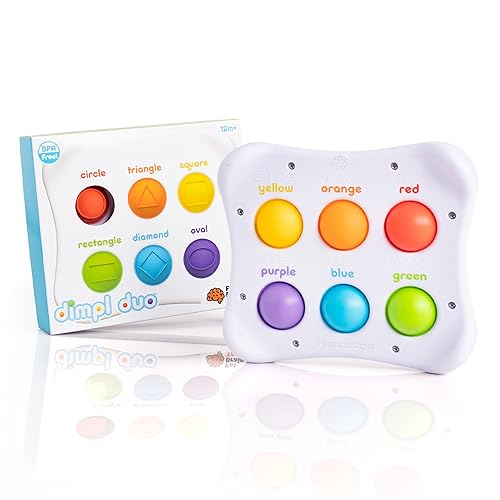
Dimpl is a good first replacement when a child loves pop-it style feedback but the full-size popper has become too loud or distracting. The silicone bubbles are satisfying without the same big sheet of repetitive noise. The frame also keeps the action contained, so it is less likely to flop around, fold, or become a performance.
It is best for younger children, quick regulation moments, circle time, car rides, and waiting rooms. Older kids may find it too obviously toy-like, and some children will still try to make sound with it. If that happens, switch to a desk-mounted texture rather than escalating to a “more interesting” fidget.
Silent tactile input on desks, notebooks, and devices
Pros
- ✓ Invisible in class
- ✓ No loose parts
- ✓ Great for quick regulation
Cons
- ✗ Adhesive wears over time
- ✗ Limited texture per strip
- ✗ Needs clean surfaces
Calm Strips are one of the most classroom-friendly options because they do not need to be held. A child can rub the texture with a thumb while listening, reading, or waiting for help. There is no object to drop, trade, throw, or lose under a desk.
They work especially well for kids who tap, pick at labels, scratch paper, or rub the edge of a desk. Put one on a notebook, pencil box, water bottle, or inside a folder if the teacher does not want anything attached to school furniture. The downside is that a single texture may stop being useful over time, so it helps to keep extras and replace worn strips.
Marble Mesh Fidget
Quiet hand movement and repetitive tactile regulation
Pros
- ✓ Very affordable
- ✓ Quiet
- ✓ Pocket friendly
Cons
- ✗ Can tear with rough use
- ✗ Less engaging for some younger kids
- ✗ Easy to misplace
A marble mesh fidget is simple: a marble sewn inside a small mesh sleeve. The child pushes the marble back and forth with one hand. It is inexpensive, quiet, and easy to keep in a pocket. For some kids, that repetitive motion is enough to reduce pencil tapping, chair rocking, or grabbing at nearby supplies.
The weak point is durability. Rough pullers can tear the mesh, and the fidget is small enough to disappear. Buy it only if your child can use small objects responsibly and the teacher is comfortable with loose fidgets.
Pocket-size tactile calming and transition support
Pros
- ✓ Portable
- ✓ Quiet
- ✓ Great for waiting rooms and transitions
Cons
- ✗ Easy to lose
- ✗ Not highly engaging for long sessions
- ✗ Material quality varies
Textured worry stones are better for calming than entertainment. They give a child something to hold, rub, and return to without the obvious play loop of a popper. That makes them useful for assemblies, lining up, reading time, or anxious transitions when the child needs a small anchor.
They are not a magic focus tool for long writing assignments. If a child needs constant hand movement, a marble mesh fidget may work better. If the child needs emotional regulation support more broadly, Calm-Down Corner Toys That Actually Help has better home setup ideas.
Portable quiet play for travel and waiting rooms
Pros
- ✓ Very affordable
- ✓ Travel friendly
- ✓ Instant setup
Cons
- ✗ Sticker loss
- ✗ Shorter sessions
- ✗ Theme-limited
A reusable sticker pad is not a classic desk fidget, but it can be a strong quiet alternative for younger kids during waiting periods, indoor recess, appointments, restaurant delays, or travel. It gives fine-motor input, visual choice, and a contained task without noise.
I would not send a large sticker pad for regular classroom instruction unless the teacher specifically wants a quiet choice activity. It is better as a backpack tool for non-instructional downtime. For more travel-specific options, see Best Travel Sensory Toys for Road Trips with Kids.
Safe oral input that replaces clothing chewing
Pros
- ✓ Discreet at school
- ✓ Different toughness levels
- ✓ Designed by an SLP
Cons
- ✗ Need replacing periodically
- ✗ Easy to lose
- ✗ Not for biters who break things
Chewable pencil toppers solve a different problem. If a child is chewing clothing, pencils, hair, erasers, or backpack straps, a hand fidget may not meet the sensory need. A chewable topper gives oral input in a safer, more socially acceptable way.
Fit matters. Some kids need a tougher version; others chew lightly and just need a designated item. Check the product guidance, inspect it regularly, and replace it if it shows damage. For a broader look at oral sensory supports, read Best Sensory Tools for Kids Who Chew.
How to Introduce a Classroom Fidget
1) Ask the teacher before sending it
Even a quiet fidget can create problems if it appears without context. A short note is enough: “We are trying this to reduce tapping and help with listening. If it becomes distracting, please send it home.” That frames the item as a support, not a reward or toy.
2) Practise at home first
Do a five-minute “listening while using it” test. Read a short story, give two-step directions, or have the child answer questions while holding the fidget. If they cannot listen while using it at home, it probably will not help at school yet.
3) Use one fidget at a time
A whole pouch of choices often becomes the distraction. Start with one tool and one rule. If it works, keep it boring and consistent. If it does not work, change the sensory match rather than adding more novelty.
4) Retire fidgets that become toys
If the child is throwing it, showing it off, trading it, or using it for sound, the fidget is no longer doing its job. That does not mean the child failed. It means the tool is not the right fit for that setting.
Classroom Fit by Situation
Desk work
Calm Strips, marble mesh, and textured stones are strongest because they support one-handed use. Avoid anything that requires looking down constantly during writing or teacher instruction.
Carpet time or assemblies
A worry stone or small Dimpl can help if the child can keep it in one hand. For kids who need bigger body input, a fidget may be less useful than a movement job before sitting.
Tests and independent reading
Choose the least visually interesting option. Calm Strips are often best here because the child can get tactile input without manipulating an object.
Transitions and waiting
Worry stones and Dimpl are better than stickers because they can be used standing in line. Sticker pads are better for long waits outside formal instruction.
Want better toy picks without the research rabbit hole?
Short, practical recommendations by age, need, and budget.
FAQ
Are pop-it toys too noisy for school?
Not always, but many are too noticeable for shared classrooms. If the popper is becoming a toy, social object, or sound source, choose a quieter replacement with less performance value.
What is the most discreet classroom fidget?
Calm Strips are usually the most discreet because they attach to an existing school item and do not need to be held. Chewable pencil toppers can also be discreet when the main issue is pencil chewing.
How do I know whether my child needs a fidget or a movement break?
If the child uses the fidget calmly and listens better, it is probably helping. If they keep escalating, dropping it, or seeking bigger input, they may need movement, heavy work, or a different seating routine before the focused task.
Should every kid with ADHD have a fidget at school?
No. Some kids focus better with one; others focus worse because the fidget becomes the main event. Start with the smallest support that addresses the actual behaviour you are seeing.
Related reads
- Calm Strips vs Marble Mesh Fidget for Classroom Focus
- Best Fidget Toys for School
- Best Homework Fidgets for Kids
- Best Sensory Toys for ADHD Kids
- Fidget Toys That Don't Look Like Fidget Toys
If You Can Only Buy One
Fat Brain Toys Dimpl is the safest first replacement for a younger child who wants pop-it style feedback without the full noisy sheet. For an older child or a stricter classroom, start with Calm Strips instead.
Want better toy picks without the research rabbit hole?
Get concise recommendations by age, need, and budget.
Where to go next
By age
Best Toys for 4-Year-Olds (Learning Through Play) (2026)
Keep the recommendations age-appropriate for your kid’s stage.
By need
Best Sensory Toys for Kids with ADHD (2026)
Jump to picks focused on ADHD, sensory, and regulation support.
By budget
Best Gifts for Kids Under $25 (2026)
Compare strong options in lower price brackets before you buy.
Related Articles
Best Toys for Kids Who Rush Through Homework
Focus-break and thinking toys for kids who hurry through homework, guess quickly, or need practice slowing down.
Read more →
Best No-Mess Sensory Toys for Bedrooms
Low-mess sensory toys that can live near the bed without sand, slime, batteries, or cleanup fights.
Read more →
Calm Strips vs Marble Mesh Fidget for Classroom Focus
A quiet fidget comparison for school, homework, and kids who need discreet tactile input.
Read more →