Best Sensory Tools for Kids Who Chew
Safe sensory tools and toys for kids who seek oral input and chew clothing, pencils, or sleeves.
Snapshot
| Toy | Age | Price | Best for | Link |
|---|---|---|---|---|
| #1 ARK Therapeutic Chewable Pencil Toppers | 5+ | CAD $13–$25 | Safe oral input that replaces clothing chewing | Check Price |
| #2 Munchables Sensory Chew Necklace | 3+ | CAD $18–$30 | Wearable chew tool for ongoing oral sensory needs | Check Price |
| #3 Chewigem Sensory Chew Bangle | 5+ | CAD $20–$35 | Hand-accessible chew that doubles as a fidget | Check Price |
| #4 Weighted Lap Pad | 4+ | CAD $25–$45 | Deep-pressure input during homework, meals, and regulation breaks | Check Price |
Affiliate links. Prices can change.
Chewing is often sensory seeking. The goal is safe replacement, not constant correction. A child who chews sleeves, collars, pencils, hoodie strings, toys, or fingers may be looking for oral input that helps with focus, stress, boredom, or transitions.
The right tool gives that need a safer path. It should be easy to clean, appropriate for the child’s chewing strength, and available in the moments when chewing usually happens. It should also fit the setting. A necklace may work at home but feel too visible at school. A pencil topper may be perfect for homework but useless during a car ride.
ARK Therapeutic Chewable Pencil Toppers
Reliable engagement, low setup friction, and strong replay value for real family routines.
This guide focuses on chew-safe sensory tools that are practical, repeatable, and useful beyond the first week.
What to Look For
- Chew strength match. Gentle mouthing and hard biting need different toughness levels.
- Easy cleaning. Chew tools need regular washing, especially if they travel to school.
- Right format. Pencil topper, necklace, bangle, lap pad, and tactile fidget all solve different moments.
- Discreet enough for the setting. A tool only works if the child is willing to use it.
- Safe replacement. The goal is fewer sleeves, pencils, fingers, and unsafe objects in the mouth.
Our Top Picks
Safe oral input that replaces clothing chewing
Pros
- ✓ Discreet at school
- ✓ Different toughness levels
- ✓ Designed by an SLP
Cons
- ✗ Need replacing periodically
- ✗ Easy to lose
- ✗ Not for biters who break things
Wearable chew tool for ongoing oral sensory needs
Pros
- ✓ Always available
- ✓ Looks like jewelry
- ✓ Easy to clean
Cons
- ✗ Not for under 3
- ✗ Cord can break with hard use
- ✗ Visible at school
Chewigem Sensory Chew Bangle
Hand-accessible chew that doubles as a fidget
Pros
- ✓ Doubles as fidget
- ✓ Worn on wrist
- ✓ Variety of textures
Cons
- ✗ Pricier than basic chews
- ✗ Sized to fit wrist
- ✗ Some kids prefer necklace style
Weighted Lap Pad
Deep-pressure input during homework, meals, and regulation breaks
Pros
- ✓ Grounding pressure input
- ✓ No setup needed
- ✓ Works across routines
Cons
- ✗ Too heavy for some kids
- ✗ Not ideal for travel
- ✗ Needs correct weight selection
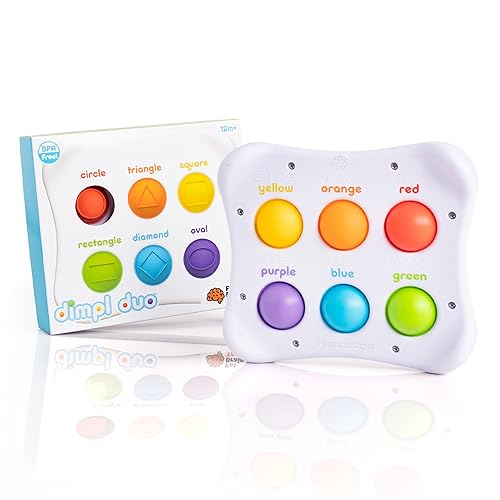
Fat Brain Toys Dimpl
Silent desk fidget for sustained focus
Pros
- ✓ Truly silent
- ✓ Durable
- ✓ Pocket-size
Cons
- ✗ Short play windows
- ✗ Skews younger
- ✗ Limited challenge
Silent tactile input on desks, notebooks, and devices
Pros
- ✓ Invisible in class
- ✓ No loose parts
- ✓ Great for quick regulation
Cons
- ✗ Adhesive wears over time
- ✗ Limited texture per strip
- ✗ Needs clean surfaces
Before You Buy a Chew Tool
Start by noticing when chewing happens. If your child chews during homework, a pencil topper may be the cleanest match because it lives exactly where the behaviour happens. If chewing happens during transitions, car rides, or waiting rooms, a necklace or bangle is more useful because it stays with the child. If chewing increases when the child is tired, overwhelmed, or trying to sit still, oral input may need to be paired with body input like a lap pad or movement break.
Also look at intensity. Some kids lightly mouth objects and mainly need texture. Others bite hard enough to shred pencil erasers, hoodie strings, or silicone. A soft chew will not survive a hard biter. A tough chew may feel uncomfortable for a child who only needs gentle input. Check manufacturer guidance, inspect tools regularly, and replace anything with cracks, tears, or missing pieces.
The best chew tool is not the one that looks the most therapeutic. It is the one your child will actually use instead of clothing, fingers, or unsafe objects.
Why These Picks Made the List
ARK Therapeutic Chewable Pencil Toppers
ARK Therapeutic Chewable Pencil Toppers are the best first choice for kids who chew while writing, drawing, or doing homework. They put oral input on the pencil instead of on sleeves or erasers, which makes the replacement obvious. The school fit is strong because the tool does not look like a large sensory toy on the desk.
The tradeoff is that toppers are easy to lose and only help when a pencil is in use. They are not the right all-day solution for a child who chews while walking, reading, or riding in the car. Match the toughness level carefully and check the topper often if your child is a hard chewer.
Munchables Sensory Chew Necklace
A chew necklace is useful when the child needs oral input across the day. It is always available, which matters during transitions and waiting periods. It can also reduce the “stop chewing that” loop because the child has an allowed object ready.
The downside is visibility. Some kids like the jewellery feel; others do not want classmates asking about it. Necklaces also need cord safety awareness and regular cleaning. For home and errands, they can be very practical. For school, check whether your child is comfortable wearing one.
Chewigem Sensory Chew Bangle
A chew bangle works well for kids who want the tool on their body but do not like necklaces. It can double as a tactile fidget because the child can roll it, press it, or turn it in their hands before chewing. That makes it useful for kids who seek both mouth and hand input.
The limitation is fit and preference. Some kids dislike anything on their wrist, and others prefer a chew they can bring directly to their mouth without bending their arm. Bangles are worth considering when necklaces are too visible or distracting.
Weighted Lap Pad
A weighted lap pad is not a chew tool, but it belongs here because chewing can increase when a child is under-regulated. Deep pressure at the lap can help some kids sit, read, or start homework with less restless searching for input. For those children, a lap pad may reduce chewing indirectly.
Use it as a support, not a restraint. The child should be able to remove it easily, and the weight should feel grounding rather than heavy. It pairs especially well with a pencil topper during seated work.
Fat Brain Toys Dimpl
Dimpl is here as a quiet hand fidget for younger kids or kids who need a silent desk option. It gives tactile feedback without noise, batteries, or loose pieces. For some children, giving the hands a job reduces the urge to put random objects in the mouth.
It is not a substitute for a chew tool if the child truly needs oral input. It is better as a companion tool: one hand fidget plus one safe chew, instead of chewing every nearby object.
Calm Strips (Textured Stickers)
Calm Strips are useful when chewing is tied to focus and restlessness rather than strong oral seeking. A textured strip on a desk, notebook, water bottle, or device gives the child a quiet place to rub a thumb or finger. That can help in classrooms where toys are distracting.
They do wear down and need a clean surface. They also will not satisfy hard chewers. Think of them as a discreet tactile support, not the main replacement for sleeves or pencils.
How to Introduce the Tool Without a Fight
Do not present a chew tool as punishment. “Stop chewing your shirt” often turns the habit into shame. A better script is: “Your mouth seems to need something to chew. This one is safe for chewing. Shirts are not.” Then put the tool where the chewing already happens.
Offer choices, but not too many. For example: pencil topper for homework, necklace for the car, bangle for reading. Let your child help choose colour or format when possible. Ownership matters, especially for older kids who are sensitive about looking different.
Build a cleaning routine from the start. A small container labelled “clean chews” and “wash tonight” can prevent chew tools from rolling around backpacks or desk drawers.
Want better toy picks without the research rabbit hole?
Short, practical recommendations by age, need, and budget.
Practical Setup Tips
1) Put the tool at the trigger point
If chewing happens during homework, store the pencil topper with pencils. If it happens during screen time, keep the necklace near the couch. If it happens in the car, keep a clean travel chew in the bag.
2) Pair oral input with body input
Some kids chew less after heavy work, deep pressure, or movement. Try a short movement break, then the chew tool, rather than expecting oral input to solve every regulation need alone.
3) Inspect tools often
Chew tools are meant to be chewed, but they are not indestructible. Replace them when damaged. If your child bites through tools quickly, move to a tougher option and consider professional guidance.
4) Keep school use discreet
For school, pencil toppers, textured stickers, and low-profile chew jewellery usually work better than bulky tools. Ask what your child will actually use in front of peers.
FAQ
Are these toys only for kids with a diagnosis?
No. These picks can help many kids who need safer oral input, better focus, calmer transitions, or lower-stimulation play. If chewing is intense, persistent, or connected to anxiety, feeding issues, or safety concerns, get professional advice.
How many chew tools should we use at one time?
Start with one main chew and one backup format. Too many choices can become clutter. The goal is a reliable replacement in the setting where chewing happens most.
What if my child chews through everything?
Choose tougher chew tools, inspect them daily, and stop using anything damaged. Hard chewing can be a safety issue, so it is worth asking an occupational therapist, speech-language pathologist, dentist, or paediatrician for guidance.
Can a fidget replace a chew tool?
Sometimes, but not always. If the chewing is really about hand restlessness, a tactile fidget may help. If the child needs oral input, give them something designed for chewing.
Related reads
- Best Occupational Therapy Toys for Home Use
- Best Sensory Toys for ADHD Kids
- Calm-Down Corner Toys That Actually Help
- Best Homework Fidgets for Kids
- Best Toys for Emotional Regulation Kids
If You Can Only Buy One
ARK Therapeutic Chewable Pencil Toppers.
They are the best starting point for kids who chew during schoolwork, drawing, or homework because they replace one of the most common unsafe chewing targets. If your child chews across the whole day, start with a necklace or bangle instead.
Want better toy picks without the research rabbit hole?
Get concise recommendations by age, need, and budget.
Where to go next
By age
Best Toys for 4-Year-Olds (Learning Through Play) (2026)
Keep the recommendations age-appropriate for your kid’s stage.
By need
Best Sensory Toys for Kids with ADHD (2026)
Jump to picks focused on ADHD, sensory, and regulation support.
By budget
Best Budget Sensory Toys Under $20
Compare strong options in lower price brackets before you buy.
Related Articles
Best Toys for Kids Who Rush Through Homework
Focus-break and thinking toys for kids who hurry through homework, guess quickly, or need practice slowing down.
Read more →
Best No-Mess Sensory Toys for Bedrooms
Low-mess sensory toys that can live near the bed without sand, slime, batteries, or cleanup fights.
Read more →
Calm Strips vs Marble Mesh Fidget for Classroom Focus
A quiet fidget comparison for school, homework, and kids who need discreet tactile input.
Read more →