Best Homework Fidgets for Kids (That Actually Help Focus)
Desk-friendly fidgets for homework time that support concentration instead of creating distractions.
Snapshot
| Toy | Age | Price | Best for | Link |
|---|---|---|---|---|
| #1 Calm Strips (Textured Stickers) | 6+ | CAD $6–$13 | Silent tactile input on desks, notebooks, and devices | Check Price |
| #2 Textured Sensory Worry Stones (6-pack) | 3+ | CAD $15–$25 | Pocket-size tactile calming and transition support | Check Price |
| #3 Liquid Motion Bubbler Timer | 3+ | CAD $15–$25 | Visual calming during short reset breaks | Check Price |
| #4 Marble Mesh Fidget | 6+ | CAD $6–$13 | Quiet hand movement and repetitive tactile regulation | Check Price |
Affiliate links. Prices can change.
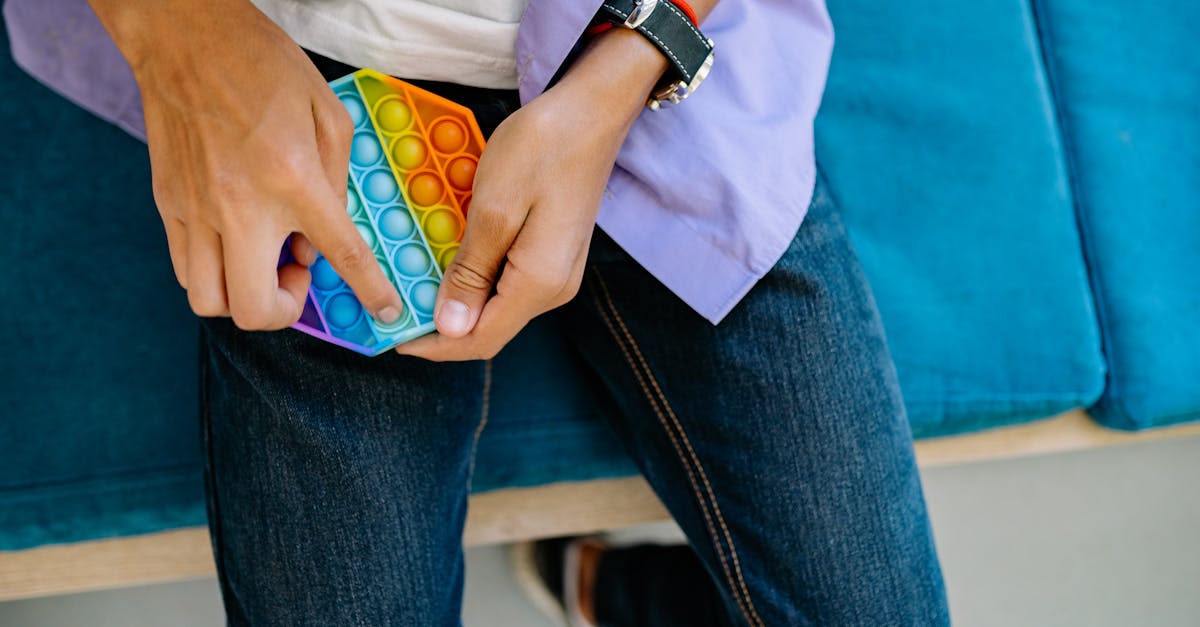
Homework fidgets need to be quiet enough to help without becoming the assignment.
The goal is not to keep a child's hands busy at any cost. The goal is to reduce the little bits of friction that make homework feel impossible: tapping pencils, chewing sleeves, leaving the chair every two minutes, picking at paper, or getting stuck before the first question. A useful homework fidget gives the body a small job so the brain has more room for reading, writing, and problem-solving.
Calm Strips (Textured Stickers)
Reliable engagement, low setup friction, and strong replay value for real family routines.
This guide focuses on fidgets that are practical, repeatable, and useful beyond the first week. If your child needs a broader homework reset routine, pair these picks with best toys for focus breaks between homework. If the main problem is school noise or class visibility, alternatives to noisy fidget toys for classroom focus is the safer list.
What to Look For
- Quiet feedback. Homework fidgets should not click, buzz, rattle, or invite constant showing-off.
- One-hand use. The best options leave one hand free for writing, scrolling, or turning pages.
- Low visual drama. Bright, flashy toys can pull attention away from the work.
- Easy boundaries. A good fidget is simple to pause when it becomes the focus instead of the support.
- Right sensory match. Some kids need texture, some need pressure, some need chewing, and some need a short visual reset.
How to Tell Whether a Fidget Is Helping
A homework fidget is helping if the work starts sooner, transitions are calmer, or your child can stay near the task longer than usual. It does not need to create perfect stillness. Many kids focus better when their hands, mouth, or eyes have predictable input.
Watch the pattern over a few sessions. If the fidget becomes a toy storyline, gets thrown across the room, or turns into constant negotiation, it is not the right homework tool for that moment. Move it to a break basket and try something quieter. For kids who need subtle tools outside the house, see fidget toys that don't look like fidget toys.
Our Top 6 Picks
Silent tactile input on desks, notebooks, and devices
Pros
- ✓ Invisible in class
- ✓ No loose parts
- ✓ Great for quick regulation
Cons
- ✗ Adhesive wears over time
- ✗ Limited texture per strip
- ✗ Needs clean surfaces
Calm Strips are the most homework-friendly option because they do not add an object to manage. Stick one to the edge of a desk, notebook, pencil case, laptop, or water bottle and the fidget is always there when your child needs it.
They work especially well for kids who pick at skin, rub fabric, tap surfaces, or need a tiny sensory anchor while reading. The limit is texture variety: one strip may feel perfect to one child and boring to another. Start with a small pack and place it where homework actually happens, not where it looks tidy.
Pocket-size tactile calming and transition support
Pros
- ✓ Portable
- ✓ Quiet
- ✓ Great for waiting rooms and transitions
Cons
- ✗ Easy to lose
- ✗ Not highly engaging for long sessions
- ✗ Material quality varies
Worry stones are better for homework than many novelty fidgets because the movement is small and repetitive. A child can rub one while listening to instructions, thinking through a math step, or waiting for a parent to check a sentence.
The risk is that small pieces disappear. Keep one at the homework spot, one in a backpack, and one in the car instead of treating the whole set as a toy pile. If your child tends to mouth small objects, choose a chew-safe option instead.
Liquid Motion Bubbler Timer
Visual calming during short reset breaks
Pros
- ✓ Quiet visual input
- ✓ Low setup
- ✓ Good calm-down corner fit
Cons
- ✗ Can leak if damaged
- ✗ Mostly passive
- ✗ Some kids lose interest quickly
A liquid motion timer is not a hand fidget for writing time. It is a reset tool for the moment before homework, between subjects, or after a frustration spike. Flip it, watch one cycle, then return to the next small step.
That boundary matters. If the timer stays on the desk during every problem, some kids will stare at it instead of working. Use it as a short transition: one flip before reading, one flip after five math questions, or one flip when a page feels overwhelming.
Marble Mesh Fidget
Quiet hand movement and repetitive tactile regulation
Pros
- ✓ Very affordable
- ✓ Quiet
- ✓ Pocket friendly
Cons
- ✗ Can tear with rough use
- ✗ Less engaging for some younger kids
- ✗ Easy to misplace
Marble mesh fidgets are simple: push the marble back and forth inside the sleeve. That is why they work for some kids. The motion is predictable, quiet, and not very interesting to everyone else at the table.
They are not indestructible. If your child pulls, twists, or bites, the mesh may not last. But for kids who need repetitive finger movement during spelling practice or reading, this is one of the cheapest low-risk experiments.
Safe oral input that replaces clothing chewing
Pros
- ✓ Discreet at school
- ✓ Different toughness levels
- ✓ Designed by an SLP
Cons
- ✗ Need replacing periodically
- ✗ Easy to lose
- ✗ Not for biters who break things
For kids who chew sleeves, collars, erasers, or pencils during homework, a hand fidget may not solve the real need. Chewable pencil toppers give oral sensory input in a safer, more intentional way.
Match the toughness level to your child and inspect it often. These are not meant to last forever, and aggressive chewers may need a stronger chew tool. For more oral-sensory options, see best sensory tools for kids who chew.
Pocket-size spatial reasoning puzzles
Pros
- ✓ Tiny footprint
- ✓ No setup beyond opening the case
- ✓ Many challenge levels
Cons
- ✗ Small pieces
- ✗ Mostly solo play
- ✗ Harder puzzles can frustrate
Kanoodle is not a fidget to use while writing. It belongs in the break slot. After a hard worksheet or before a writing task, a short spatial puzzle can give the brain a different kind of challenge without turning on a screen.
Use it carefully with kids who get frustrated fast. Pick one easy puzzle, set a short timer, and stop before the break becomes a new battle. If your child needs longer STEM breaks, best STEM toys for kids who hate worksheets has more options.
Want better toy picks without the research rabbit hole?
Short, practical recommendations by age, need, and budget.
Practical Setup Tips
1) Match the fidget to the homework problem
If the problem is restless hands, start with Calm Strips, worry stones, or marble mesh. If the problem is chewing, start with pencil toppers. If the problem is emotional overload, use the liquid timer before the task begins. If the problem is mental fatigue, use Kanoodle as a timed break.
2) Keep the rule simple
Try: “This helps your body while your brain works.” If the fidget becomes the activity, it goes in the break basket. That is easier for kids to understand than a long lecture about focus.
3) Use short work blocks
Many kids do better with 10 to 20 minutes of work, then a short reset. A fidget can extend a work block, but it should not be expected to fix an overloaded schedule.
4) Rotate without creating a reward trap
Keep one or two tools available at a time. Swap them weekly if they stop helping. Avoid presenting every fidget as a prize for finishing homework; the tool should support the routine, not turn homework into a shopping loop.
What to Skip
Skip loud poppers, clickers, spinners with tricks, slime near papers, and anything that needs two hands during writing. Those can be fun toys, but they often create extra cleanup, sibling conflict, or visual distraction during homework.
Also skip tools that embarrass your child. If they would never use it at the kitchen table or school desk, choose something more discreet from best desk fidgets for homework time.
FAQ
Are homework fidgets only for kids with ADHD?
No. ADHD kids may benefit from them often, but many children need sensory input during reading, writing, or math. The useful question is whether the fidget improves the routine.
Should my child use a fidget during every homework session?
Not necessarily. Some days they may need texture, chewing, or pressure. Other days they may need movement before sitting down. Treat the fidget as one tool, not a permanent requirement.
What if the fidget becomes distracting?
Move it to a break basket and try a quieter option. A fidget that distracts is not a failure; it is just the wrong tool for that job.
How many homework fidgets should we keep out?
Start with one primary tool and one backup. Too many visible options can create more choosing, negotiating, and switching.
Related reads
- Best Desk Fidgets for Homework Time
- Best Toys for Focus Breaks Between Homework
- Alternatives to Noisy Fidget Toys for Classroom Focus
- Fidget Toys That Don't Look Like Fidget Toys
- Calm-Down Corner Toys That Actually Help
If You Can Only Buy One
Calm Strips (Textured Stickers).
They offer the best balance of quiet tactile input, low setup, and low distraction for most homework routines.
Want better toy picks without the research rabbit hole?
Get concise recommendations by age, need, and budget.
Where to go next
By age
Best Toys for 4-Year-Olds (Learning Through Play) (2026)
Keep the recommendations age-appropriate for your kid’s stage.
By need
Best Sensory Toys for Kids with ADHD (2026)
Jump to picks focused on ADHD, sensory, and regulation support.
By budget
Best Gifts for Kids Under $25 (2026)
Compare strong options in lower price brackets before you buy.
Related Articles
Best Toys for Kids Who Rush Through Homework
Focus-break and thinking toys for kids who hurry through homework, guess quickly, or need practice slowing down.
Read more →
Best No-Mess Sensory Toys for Bedrooms
Low-mess sensory toys that can live near the bed without sand, slime, batteries, or cleanup fights.
Read more →
Calm Strips vs Marble Mesh Fidget for Classroom Focus
A quiet fidget comparison for school, homework, and kids who need discreet tactile input.
Read more →