Best After-School Reset Toys for 6-Year-Olds
Transition-friendly toys to help 6-year-olds decompress after school before homework and dinner.
Snapshot
| Toy | Age | Price | Best for | Link |
|---|---|---|---|---|
| #1 The Kids' Yoga Deck | 4+ | CAD $20–$35 | Guided movement breaks and body-awareness practice | Check Price |
| #2 Sensory Body Sock | 3+ | CAD $35–$55 | Proprioceptive input for short movement resets | Check Price |
| #3 Liquid Motion Bubbler Timer | 3+ | CAD $15–$25 | Visual calming during short reset breaks | Check Price |
| #4 Weighted Lap Pad | 4+ | CAD $25–$45 | Deep-pressure input during homework, meals, and regulation breaks | Check Price |
Affiliate links. Prices can change.
The best reset toys give movement or calming input without creating a big cleanup problem.
The right toy can lower friction, support regulation, and make day-to-day life noticeably easier.
The Kids' Yoga Deck
Reliable engagement, low setup friction, and strong replay value for real family routines.
This guide focuses on toys that are practical, repeatable, and useful beyond the first week.
What to Look For
- Fast entry. If setup is complicated, attention disappears.
- Clear feedback. Kids stay engaged when they can see progress quickly.
- Replay value. Good toys survive past the novelty spike.
- Regulation support. The best toys help kids recover, not just stay busy.
Our Top 6 Picks
The Kids' Yoga Deck
Guided movement breaks and body-awareness practice
Pros
- ✓ No pieces beyond cards
- ✓ Good transition tool
- ✓ Works solo or with parent prompts
Cons
- ✗ Needs participation
- ✗ Not a toy every kid chooses independently
- ✗ Cards can scatter
Sensory Body Sock
Proprioceptive input for short movement resets
Pros
- ✓ Deep-pressure movement
- ✓ Good for sensory seekers
- ✓ Can turn breaks into regulation reps
Cons
- ✗ Needs supervision and clear rules
- ✗ Sizing matters
- ✗ Not discreet for school
Liquid Motion Bubbler Timer
Visual calming during short reset breaks
Pros
- ✓ Quiet visual input
- ✓ Low setup
- ✓ Good calm-down corner fit
Cons
- ✗ Can leak if damaged
- ✗ Mostly passive
- ✗ Some kids lose interest quickly
Weighted Lap Pad
Deep-pressure input during homework, meals, and regulation breaks
Pros
- ✓ Grounding pressure input
- ✓ No setup needed
- ✓ Works across routines
Cons
- ✗ Too heavy for some kids
- ✗ Not ideal for travel
- ✗ Needs correct weight selection
Visual calming and fine-motor sensory regulation
Pros
- ✓ Trusted education brand
- ✓ Great for calm-down corners
- ✓ No batteries and low friction
Cons
- ✗ Can leak if damaged
- ✗ Shorter play for some older kids
- ✗ Not strong for active movement seekers
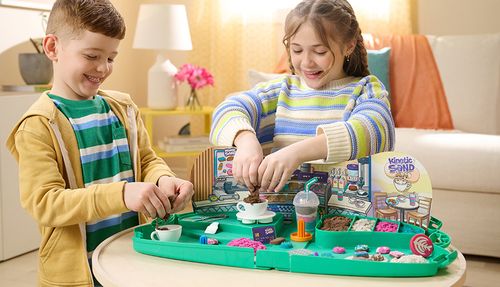
Kinetic Sand Deluxe Set
Sensory regulation and transitions
Pros
- ✓ Very calming tactile input
- ✓ Low noise
- ✓ Easy start/stop
Cons
- ✗ Can get messy
- ✗ Best with tray
- ✗ Not ideal for carpet
Why These Picks Made the List
The Kids' Yoga Deck
The Kids' Yoga Deck is here for guided movement breaks and body-awareness practice. The useful part is no pieces beyond cards and good transition tool, not just that it looks good in a gift guide.
Before buying, watch for needs participation and not a toy every kid chooses independently. That is the difference between a toy that gets used and a toy that becomes shelf clutter.
Sensory Body Sock
Sensory Body Sock is here for proprioceptive input for short movement resets. The useful part is deep-pressure movement and good for sensory seekers, not just that it looks good in a gift guide.
Before buying, watch for needs supervision and clear rules and sizing matters. That is the difference between a toy that gets used and a toy that becomes shelf clutter.
Liquid Motion Bubbler Timer
Liquid Motion Bubbler Timer is here for visual calming during short reset breaks. The useful part is quiet visual input and low setup, not just that it looks good in a gift guide.
Before buying, watch for can leak if damaged and mostly passive. That is the difference between a toy that gets used and a toy that becomes shelf clutter.
Weighted Lap Pad
Weighted Lap Pad is here for deep-pressure input during homework, meals, and regulation breaks. The useful part is grounding pressure input and no setup needed, not just that it looks good in a gift guide.
Before buying, watch for too heavy for some kids and not ideal for travel. That is the difference between a toy that gets used and a toy that becomes shelf clutter.
Learning Resources Sensory Trio Fidget Tubes
Learning Resources Sensory Trio Fidget Tubes is here for visual calming and fine-motor sensory regulation. The useful part is trusted education brand and great for calm-down corners, not just that it looks good in a gift guide.
Before buying, watch for can leak if damaged and shorter play for some older kids. That is the difference between a toy that gets used and a toy that becomes shelf clutter.
Kinetic Sand Deluxe Set
Kinetic Sand Deluxe Set is here for sensory regulation and transitions. The useful part is very calming tactile input and low noise, not just that it looks good in a gift guide.
Before buying, watch for can get messy and best with tray. That is the difference between a toy that gets used and a toy that becomes shelf clutter.
Want better toy picks without the research rabbit hole?
Short, practical recommendations by age, need, and budget.
Practical Setup Tips
1) Keep only 3 to 5 toys visible
Fewer options usually means deeper play and less overwhelm.
2) Use short play blocks
Try 15 to 25 minute sessions with a clear start and finish.
3) Pair movement with focus toys
A quick movement break before table play improves transitions.
4) Rotate weekly
Rotation keeps engagement high without constant new purchases.
FAQ
Are these toys only for kids with a diagnosis?
No. These picks can help many kids who need better focus, calmer transitions, or lower stimulation play.
How many toys should we use at one time?
Start with 3 to 5 active options. Too much visual choice can reduce sustained attention.
What if my child gets bored quickly?
Use short sessions, rotate weekly, and focus on toys with immediate feedback and open-ended replay.
Related reads
If You Can Only Buy One
The Kids' Yoga Deck.
It gives the best balance of calm engagement, flexibility, and long-term replay for most households.
Want better toy picks without the research rabbit hole?
Get concise recommendations by age, need, and budget.
Where to go next
By age
Best Screen-Free Weekend Toys for 6-Year-Olds
Keep the recommendations age-appropriate for your kid’s stage.
By need
Gifts for Neurodivergent Kids: A Parent's Guide (2026)
Jump to picks focused on ADHD, sensory, and regulation support.
By budget
Best Gifts for Kids Under $25 (2026)
Compare strong options in lower price brackets before you buy.
Related Articles

Best Homework Break Toys for 6-Year-Olds
Short-break toys that help 6-year-olds reset between homework blocks and return with less resistance.
Read more →
Best Focus Toys for 6-Year-Olds at Home
Practical toys that help 6-year-olds settle, focus, and stay with tasks longer at home.
Read more →
Alternatives to Noisy Fidget Toys for Classroom Focus
Quiet alternatives to noisy fidgets that still give useful sensory input.
Read more →