Best Focus Toys for 6-Year-Olds at Home
Practical toys that help 6-year-olds settle, focus, and stay with tasks longer at home.
Snapshot
| Toy | Age | Price | Best for | Link |
|---|---|---|---|---|
| #1 Liquid Motion Bubbler Timer | 3+ | CAD $15–$25 | Visual calming during short reset breaks | Check Price |
| #2 Learning Resources Mental Blox Critical Thinking Game | 5+ | CAD $35–$55 | Spatial logic, following directions, and co-solving | Check Price |
| #3 ThinkFun Rush Hour Junior | 5+ | CAD $25–$45 | Fast-start traffic-jam logic puzzles | Check Price |
| #4 Learning Resources Sensory Trio Fidget Tubes | 3+ | CAD $25–$45 | Visual calming and fine-motor sensory regulation | Check Price |
Affiliate links. Prices can change.
At six, focus support works best when it feels like play, not correction. A 6-year-old may be able to sit for a longer activity than a preschooler, but they still need help with transitions, frustration, body wiggles, visual overwhelm, and the gap between "I know what to do" and "I can actually stay with it."
The right focus toy gives that child an easier entry point. It can create a short reset before homework, a calm hand activity during read-aloud time, or a small thinking challenge that builds persistence without turning the afternoon into another demand.
Liquid Motion Bubbler Timer
Reliable engagement, low setup friction, and strong replay value for real family routines.
This guide focuses on toys that are practical, repeatable, and useful beyond the first week. For broader sensory support, see Best Sensory Toys for ADHD Kids. If your child needs a dedicated calming space, Calm-Down Corner Toys That Actually Help is the better next read.
What to Look For
- Fast entry. If setup takes too long, the focus window is gone before play starts.
- Quiet feedback. Visual timers, tactile strips, cards, and simple puzzles support focus without adding noise.
- A clear finish point. Six-year-olds do better when they can see when a turn, challenge, or reset is complete.
- Regulation before demand. The toy should help the child settle before harder work, not become a battle.
- Easy storage. Focus toys get used more when pieces have a home and adults do not have to rebuild everything.
Our Top 6 Picks
Liquid Motion Bubbler Timer
Visual calming during short reset breaks
Pros
- ✓ Quiet visual input
- ✓ Low setup
- ✓ Good calm-down corner fit
Cons
- ✗ Can leak if damaged
- ✗ Mostly passive
- ✗ Some kids lose interest quickly
Spatial logic, following directions, and co-solving
Pros
- ✓ Good group/sibling play
- ✓ Strong spatial reasoning
- ✓ Low-tech and classroom-friendly
Cons
- ✗ Requires reading or verbal prompts
- ✗ Pieces can scatter
- ✗ Less flashy as a gift
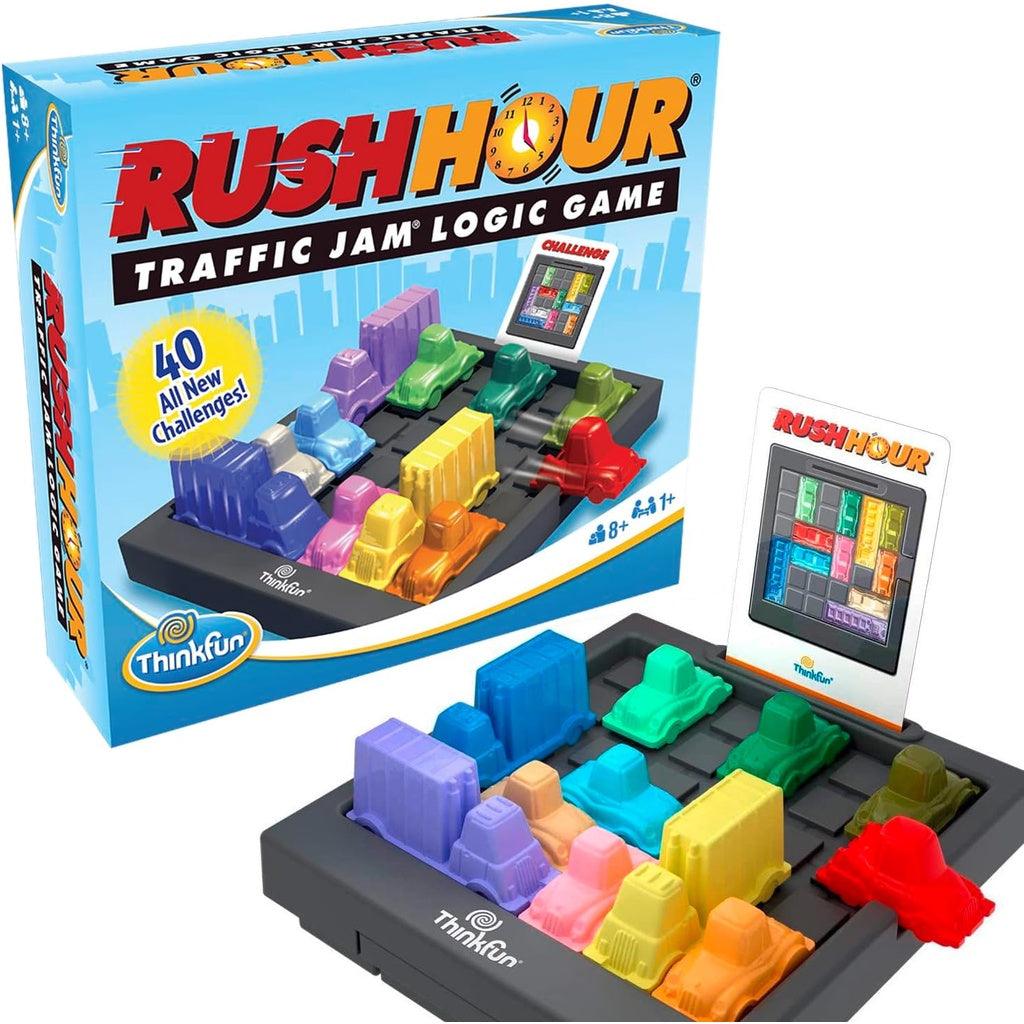
ThinkFun Rush Hour Junior
Fast-start traffic-jam logic puzzles
Pros
- ✓ Very low setup
- ✓ Clear challenge cards
- ✓ Good early logic practice
Cons
- ✗ Single-player
- ✗ Can feel repetitive
- ✗ Limited collaborative play
Visual calming and fine-motor sensory regulation
Pros
- ✓ Trusted education brand
- ✓ Great for calm-down corners
- ✓ No batteries and low friction
Cons
- ✗ Can leak if damaged
- ✗ Shorter play for some older kids
- ✗ Not strong for active movement seekers
The Kids' Yoga Deck
Guided movement breaks and body-awareness practice
Pros
- ✓ No pieces beyond cards
- ✓ Good transition tool
- ✓ Works solo or with parent prompts
Cons
- ✗ Needs participation
- ✗ Not a toy every kid chooses independently
- ✗ Cards can scatter
Silent tactile input on desks, notebooks, and devices
Pros
- ✓ Invisible in class
- ✓ No loose parts
- ✓ Great for quick regulation
Cons
- ✗ Adhesive wears over time
- ✗ Limited texture per strip
- ✗ Needs clean surfaces
Why These Picks Made the List
Liquid Motion Bubbler Timer
A liquid motion timer is useful because it asks almost nothing from a tired child. Turn it over, watch the drops move, and let the nervous system come down a notch. For 6-year-olds who get wound up before homework, reading practice, dinner, or bedtime, that passive visual focus can be more realistic than asking them to "just calm down."
It is not a teaching toy by itself, and it will not hold attention for an hour. Its job is a short reset. Use it as a bridge: two turns of the timer before handwriting, one turn after a noisy sibling conflict, or one turn in a calm-down corner before choosing the next activity. Check it occasionally for cracks or leaks, especially if your child is rough with toys.
Learning Resources Mental Blox Critical Thinking Game
Mental Blox is a better focus toy when your child needs a thinking challenge instead of a calming object. The blocks, pattern cards, and verbal directions practise spatial reasoning, listening, sequencing, and flexible problem solving. It works well beside an adult or sibling because one person can describe the build while the other tries to create it.
The tradeoff is that it asks for more language and patience than a fidget. If your child is already overloaded, start with free building or copy a simple structure instead of jumping straight into harder challenge cards. For kids who like logic games but need comparison help, Mental Blox vs Rush Hour Junior for Logic Skills goes deeper on the decision.
ThinkFun Rush Hour Junior
Rush Hour Junior is strong for 6-year-olds who can handle a small amount of frustration. The grid contains the pieces, the goal is clear, and the cards create a progression from easy wins to harder planning. It is especially good for a quiet table block when a child needs to practise looking ahead without a worksheet.
The main risk is that some children slide pieces randomly and get annoyed when the car does not escape. Help with one prompt: "Which car is blocking the way first?" Then let them move the pieces. It is mostly a solo toy, so it is better for individual focus than shared sibling play.
Learning Resources Sensory Trio Fidget Tubes
Sensory tubes are useful when the child needs visual or fine-motor input but not a big activity. They can roll, tilt, squeeze, or watch movement in a contained way. That makes them a good fit for a calm-down basket, a therapy-style corner, or a transition routine between school and home demands.
They are less useful for kids who need heavy movement. If your child is climbing furniture, crashing into cushions, or seeking big body input, a tube may not be enough. Pair it with movement first, then use the tube once the body is more ready to settle.
The Kids' Yoga Deck
A yoga deck is on this list because some focus problems are body-readiness problems. A 6-year-old who cannot sit still may not need a lecture about attention; they may need two minutes of stretching, balancing, breathing, or animal poses before asking their brain to work.
This is not an independent toy for every child. Some kids will need a parent to choose the card and do the first pose with them. Keep the routine small: three cards before homework, one calming pose before bed, or a silly movement card after school. If you turn it into a full lesson, many kids will resist it.
Calm Strips (Textured Stickers)
Calm Strips are a good low-profile option for children who seek touch while working. A strip on a notebook, table edge, water bottle, or reading folder gives the child somewhere to rub instead of picking skin, chewing pencils, grabbing nearby objects, or leaving the table every few minutes.
They work best as background support, not the main activity. Adhesive wears down and texture preference is personal, so try one placement before covering everything. If classroom use is part of the plan, Calm Strips vs Marble Mesh Fidget for Classroom Focus can help you decide which style is less distracting.
How to Use Focus Toys Without Creating a Battle
The biggest mistake is introducing a focus toy as a reward or punishment. "Use this so you can behave" usually makes the child feel managed. Instead, make it part of the routine: after snack, choose one reset toy; before reading, do one timer turn; after ten minutes of work, pick a two-minute movement card.
Keep the language neutral. Try "Let's help your body get ready" or "Choose your reset." That frames the toy as support, not proof that the child is failing. For many families, the focus toy works best before the hard task, not during it. A short sensory or visual reset can make the next ten minutes more realistic.
Want better toy picks without the research rabbit hole?
Short, practical recommendations by age, need, and budget.
Practical Setup Tips
1) Keep only 3 to 5 toys visible
Fewer choices usually means deeper use. Store the rest in a bin and rotate weekly so the setup still feels fresh without buying more.
2) Match the toy to the state
Use a bubbler, fidget tube, or Calm Strip when the child is overstimulated. Use Mental Blox or Rush Hour Junior when they are ready for thinking but need a contained task. Use yoga cards when the problem is movement.
3) Put a finish line on the activity
Six-year-olds focus better when the ending is visible: one challenge card, three yoga cards, two timer turns, or ten minutes with a puzzle. Open-ended "go focus" time can backfire.
4) Pair movement with table focus
A quick movement break before table play improves transitions. Even thirty seconds of wall pushes, animal walks, or stretches can make a quiet toy more effective.
FAQ
Are these toys only for kids with a diagnosis?
No. These picks can help many kids who need better focus, calmer transitions, or lower stimulation play at home. A diagnosis may clarify the need, but the routine still has to work in real life.
How many toys should we use at one time?
Start with three active options: one calming visual toy, one tactile option, and one thinking toy. Too much visible choice can reduce sustained attention.
What if my child gets bored quickly?
Use shorter sessions and rotate the toy's purpose. Boredom after five minutes is not failure if those five minutes helped the child reset before the next part of the day.
Should focus toys be used during homework?
Sometimes. Silent tactile tools can help during work, but visual toys and puzzles may be better before or after homework because they can pull attention away from the task.
Related reads
- Best Sensory Toys for ADHD Kids
- Learning Toys for ADHD Kids
- Calm-Down Corner Toys That Actually Help
- Mental Blox vs Rush Hour Junior for Logic Skills
- Calm Strips vs Marble Mesh Fidget for Classroom Focus
If You Can Only Buy One
Liquid Motion Bubbler Timer.
It gives the best balance of quiet visual input, low setup, and real reset value for most 6-year-olds who need a calmer way into the next task.
Want better toy picks without the research rabbit hole?
Get concise recommendations by age, need, and budget.
Where to go next
By age
Best Bedtime Calm Toys for 6-Year-Olds
Keep the recommendations age-appropriate for your kid’s stage.
By need
Best Sensory Toys for Kids with ADHD (2026)
Jump to picks focused on ADHD, sensory, and regulation support.
By budget
Best Gifts for Kids Under $25 (2026)
Compare strong options in lower price brackets before you buy.
Related Articles
Best Toys for Kids Who Rush Through Homework
Focus-break and thinking toys for kids who hurry through homework, guess quickly, or need practice slowing down.
Read more →
Best No-Mess Sensory Toys for Bedrooms
Low-mess sensory toys that can live near the bed without sand, slime, batteries, or cleanup fights.
Read more →
Calm Strips vs Marble Mesh Fidget for Classroom Focus
A quiet fidget comparison for school, homework, and kids who need discreet tactile input.
Read more →