Best Toys for Focus Breaks Between Homework Blocks
Quick-reset toys for short focus breaks that help kids return to homework with less resistance.
Snapshot
| Toy | Age | Price | Best for | Link |
|---|---|---|---|---|
| #1 The Kids' Yoga Deck | 4+ | CAD $20–$35 | Guided movement breaks and body-awareness practice | Check Price |
| #2 Sensory Body Sock | 3+ | CAD $35–$55 | Proprioceptive input for short movement resets | Check Price |
| #3 Liquid Motion Bubbler Timer | 3+ | CAD $15–$25 | Visual calming during short reset breaks | Check Price |
| #4 Learning Resources Mental Blox Critical Thinking Game | 5+ | CAD $35–$55 | Spatial logic, following directions, and co-solving | Check Price |
Affiliate links. Prices can change.
Focus breaks should reset the nervous system without making re-entry harder. That sounds simple, but it is where many homework routines fall apart. A break that is too exciting becomes a second activity to negotiate away from. A break that is too passive does not release enough body energy. A break with screens can stretch from five minutes to thirty before anyone notices.
The best homework-break toys are short, contained, and easy to stop. They give a child enough movement, pressure, visual calming, or tactile input to return to the next block with less resistance. For many families, the goal is not perfect focus. It is fewer battles, a cleaner restart, and a child who does not feel trapped at the table.
The Kids' Yoga Deck
Best short movement reset because one card can turn a break into a clear start-stop routine.
This guide focuses on practical tools for five- to fifteen-minute focus breaks between homework blocks. If your child mostly needs something to use while working, see best desk fidgets for homework time. If homework resistance is part of a wider attention pattern, compare these picks with best homework fidgets for kids and learning toys for ADHD kids.
What to Look For
- Clear stop point. A timer, card, puzzle round, or single pose makes it easier to return to work.
- Low setup. The break should start in seconds. If pieces scatter, re-entry gets harder.
- Regulating input. Movement, pressure, tactile rubbing, or visual tracking should organize the body instead of adding chaos.
- Not too rewarding. The toy should feel good, but not so good that homework becomes impossible to restart.
- Parent-light use. You may need to cue the break, but you should not have to run a full activity every time.
Our Top 6 Picks
The Kids' Yoga Deck
Guided movement breaks and body-awareness practice
Pros
- ✓ No pieces beyond cards
- ✓ Good transition tool
- ✓ Works solo or with parent prompts
Cons
- ✗ Needs participation
- ✗ Not a toy every kid chooses independently
- ✗ Cards can scatter
Sensory Body Sock
Proprioceptive input for short movement resets
Pros
- ✓ Deep-pressure movement
- ✓ Good for sensory seekers
- ✓ Can turn breaks into regulation reps
Cons
- ✗ Needs supervision and clear rules
- ✗ Sizing matters
- ✗ Not discreet for school
Liquid Motion Bubbler Timer
Visual calming during short reset breaks
Pros
- ✓ Quiet visual input
- ✓ Low setup
- ✓ Good calm-down corner fit
Cons
- ✗ Can leak if damaged
- ✗ Mostly passive
- ✗ Some kids lose interest quickly
Spatial logic, following directions, and co-solving
Pros
- ✓ Good group/sibling play
- ✓ Strong spatial reasoning
- ✓ Low-tech and classroom-friendly
Cons
- ✗ Requires reading or verbal prompts
- ✗ Pieces can scatter
- ✗ Less flashy as a gift
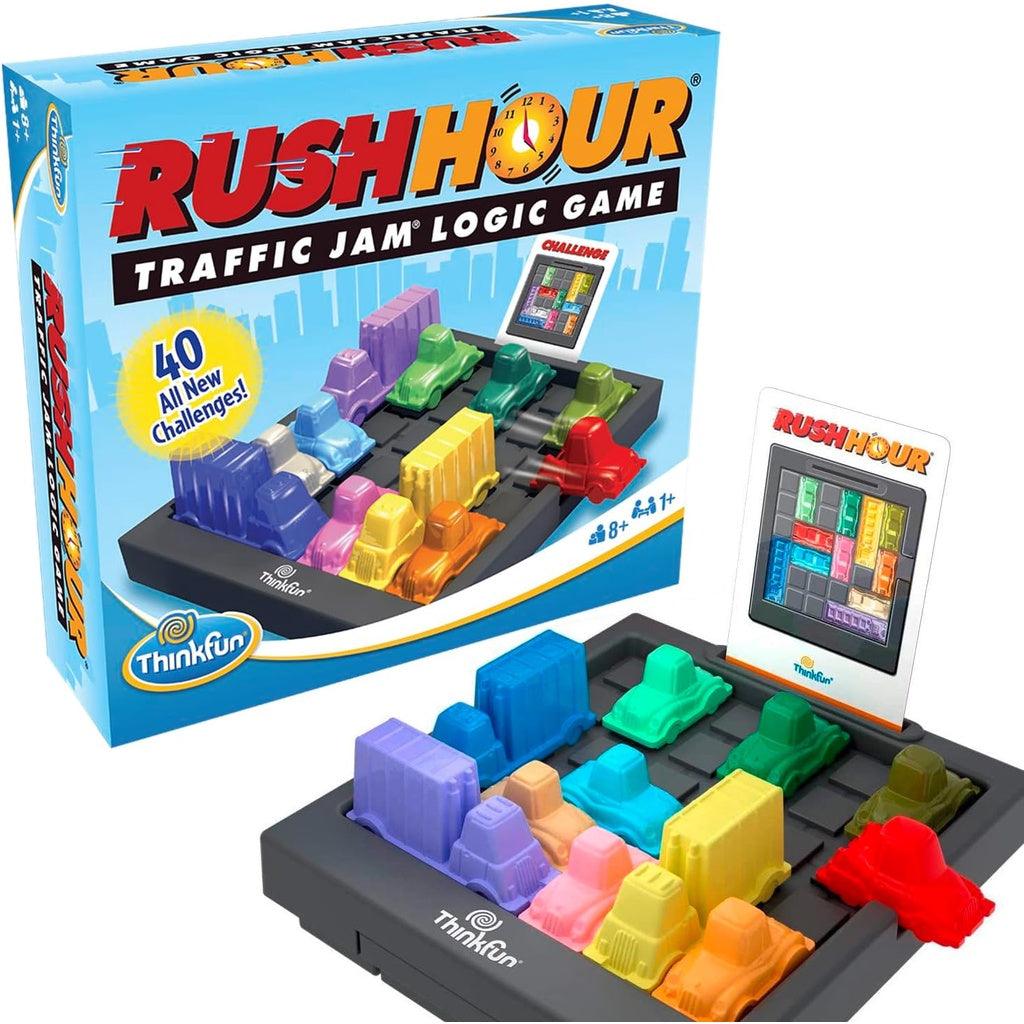
ThinkFun Rush Hour Junior
Fast-start traffic-jam logic puzzles
Pros
- ✓ Very low setup
- ✓ Clear challenge cards
- ✓ Good early logic practice
Cons
- ✗ Single-player
- ✗ Can feel repetitive
- ✗ Limited collaborative play
Silent tactile input on desks, notebooks, and devices
Pros
- ✓ Invisible in class
- ✓ No loose parts
- ✓ Great for quick regulation
Cons
- ✗ Adhesive wears over time
- ✗ Limited texture per strip
- ✗ Needs clean surfaces
Why These Picks Made the List
The Kids' Yoga Deck
The Kids' Yoga Deck is the strongest overall pick because it turns movement into a defined unit. Instead of "go run around for a bit," you can say, "Pick one card, do it twice, drink water, then we start the next problem." That structure matters. Kids who struggle with homework often need the break to be visible and finite.
It is especially good for kids who get restless, slump over, tip chairs, or melt down because their body has been still too long. Keep the deck trimmed to five favourite cards if the full stack creates too much choice. Avoid turning poses into a competition; the point is body awareness, not performance.
Sensory Body Sock
A sensory body sock gives proprioceptive input: pushing, stretching, crawling, and gentle resistance. For sensory-seeking kids, that can be much more regulating than being told to sit quietly. Used well, it can compress a lot of body input into a short break.
It needs clear boundaries. Use it on a safe floor area, supervise younger kids, and set rules before homework starts: no jumping off furniture, no covering the face for long periods, and stop when the timer ends. It is best for home, not school or public spaces.
Liquid Motion Bubbler Timer
The Liquid Motion Bubbler Timer is useful when the break needs to calm down rather than ramp up. Flip it once or twice and watch the drops fall. It gives a natural ending without a phone timer, which can reduce arguments about whether the break is finished.
It is a better fit for kids who become anxious, teary, or overstimulated during homework than for kids who need heavy movement. Keep it away from rough play because a damaged liquid toy can leak.
Learning Resources Mental Blox Critical Thinking Game
Mental Blox is not a "rest" toy, but it can work as a cognitive reset for kids who need to shift away from writing or worksheets without leaving the learning zone. One challenge card can give a quick win, some spatial reasoning, and a different kind of problem solving.
The risk is that pieces scatter and some challenges take longer than planned. Use only one card for a break, or set out a tiny build prompt in advance. It is best for kids who like puzzles and can stop after a clear round.
ThinkFun Rush Hour Junior
Rush Hour Junior can be a strong break toy because each puzzle has a built-in goal. Slide the cars, solve the jam, stop. For kids who resist open-ended breaks because they do not know what to do, a single puzzle card can feel satisfying without becoming too wild.
It can also become sticky for puzzle-loving kids who want "just one more." Keep it for longer breaks or use a visible rule: one beginner card between blocks, harder cards after homework. If your child gets frustrated by logic puzzles, do not use it as a regulation break; choose movement or tactile input instead.
Calm Strips (Textured Stickers)
Calm Strips are the smallest and least disruptive pick here. They work less as a separate break and more as a bridge back to homework. A child can rub the strip for thirty seconds, take a breath, and start the next line without leaving the table.
They are ideal for kids who lose momentum when they physically leave the homework spot. Put one on a notebook, pencil case, or desk edge. If your child needs quieter options for shared spaces, compare with best quiet toys for apartments, or start with the desk-fidget guide linked above.
A Simple Homework-Break Routine
Start with a visible work block: ten minutes of effort, five math problems, one reading page, or one spelling list. Then offer a break with a clear endpoint: one yoga card, two bubbler flips, one body-sock timer, or one puzzle card. After the break, use a re-entry cue that never changes: water sip, pencil check, next tiny task.
This works better than asking, "Do you need a break?" Many kids will say no until they are already overloaded, or yes whenever work feels hard. A scheduled break removes some negotiation. It also helps children trust that homework is not an endless tunnel.
For kids with ADHD or high movement needs, make the first break earlier than you think. Waiting until frustration is obvious often means the break has to repair a problem instead of preventing it. For kids who get sleepy or slow, choose movement before visual calming. For kids who get frantic or tearful, choose visual calming before another active game.
Want better toy picks without the research rabbit hole?
Short, practical recommendations by age, need, and budget.
Practical Setup Tips
1) Keep break tools separate from play toys
If the body sock, yoga deck, or puzzle lives with every other toy, the break can drift into playtime. Keep homework-break tools in a small bin near the work area.
2) Use a first-then script
Try: "First three problems, then one card." Or: "First reading, then two bubbler flips." Keep the script boring and consistent.
3) Avoid screen breaks during homework
Screens are not morally bad, but they are usually poor homework breaks. They are too rewarding, hard to stop, and often make the next worksheet feel worse by comparison.
4) Adjust by subject
Writing may need movement breaks because posture and hand fatigue build up. Math may need visual calming after frustration. Reading may need tactile input so hands stay busy while eyes track the page.
FAQ
How long should a homework focus break be?
For elementary-age kids, three to seven minutes is often enough. The break should be long enough to reset, not long enough to feel like the homework session ended.
Should the break happen before or after frustration?
Before, when possible. A proactive break is shorter and easier to end. Once a child is dysregulated, the break may need to become a full calm-down routine.
What if my child refuses to come back?
Shorten the work block, simplify the break, and make the endpoint more concrete. One yoga card is easier to end than "play until the timer rings." Also make the next work step tiny: one problem, one sentence, one word.
Are these toys only for kids with ADHD?
No. They can help any child who benefits from movement, pressure, visual calming, or tactile input between effortful tasks. Kids with ADHD, anxiety, sensory processing differences, or big after-school fatigue may need the structure more consistently.
Related reads
- Best Desk Fidgets for Homework Time
- Best Homework Fidgets for Kids
- Learning Toys for ADHD Kids
- Calm-Down Corner Toys That Actually Help
If You Can Only Buy One
The Kids' Yoga Deck.
It gives the clearest start-stop structure for short homework breaks while adding movement, body awareness, and a predictable path back to the next work block.
Want better toy picks without the research rabbit hole?
Get concise recommendations by age, need, and budget.
Where to go next
By age
Best Toys for 4-Year-Olds (Learning Through Play) (2026)
Keep the recommendations age-appropriate for your kid’s stage.
By need
Best Sensory Toys for Kids with ADHD (2026)
Jump to picks focused on ADHD, sensory, and regulation support.
By budget
Best Gifts for Kids Under $25 (2026)
Compare strong options in lower price brackets before you buy.
Related Articles
Best Toys for Kids Who Rush Through Homework
Focus-break and thinking toys for kids who hurry through homework, guess quickly, or need practice slowing down.
Read more →
Best No-Mess Sensory Toys for Bedrooms
Low-mess sensory toys that can live near the bed without sand, slime, batteries, or cleanup fights.
Read more →
Calm Strips vs Marble Mesh Fidget for Classroom Focus
A quiet fidget comparison for school, homework, and kids who need discreet tactile input.
Read more →