Best STEM Toys Under $40 for Kids
Strong STEM toy options under $40 for kids who learn by doing.
Snapshot
| Toy | Age | Price | Best for | Link |
|---|---|---|---|---|
| #1 ThinkFun Rush Hour | 8+ | CAD $20–$35 | Quiet logic focus and travel-friendly puzzles | Check Price |
| #2 National Geographic Mega Fossil Dig Kit | 8+ | CAD $35–$40 | Low-frustration science with quick reveal moments | Check Price |
| #3 Perplexus Harry Potter 3D Maze Ball | 8+ | CAD $30–$40 | Sustained focus training disguised as fun | Check Price |
| #4 LEGO Classic Creative Brick Box | 4+ | CAD $35–$40 | Structured creativity that scales with age | Check Price |
Affiliate links. Prices can change.
Under $40 can still buy real thinking reps if you prioritize feedback loops over flashy features. The trick is to look for toys that make a child test, adjust, and try again without needing a tablet, a long adult setup, or a huge storage system.
The right toy can lower friction, support regulation, and make day-to-day life noticeably easier. A good budget STEM toy is not just “educational.” It has to survive real family routines: after-school energy dips, sibling interruptions, small tables, missing pieces, and kids who may quit if the first step feels too hard.
ThinkFun Rush Hour
Quiet logic reps with low setup and strong repeat play for real family routines.
This guide focuses on toys that are practical, repeatable, and useful beyond the first week. Price note: marketplace pricing moves fast, so if a listing jumps over $40, swap to the closest lower-priced version with the same play pattern. The category matters less than the loop: a child should be building, predicting, solving, sorting, testing, or noticing cause and effect.
Who This Is For
- Parents who want learning-focused toys with strong replay value.
- Kids curious about logic, building, beginner coding, science, or hands-on problem-solving.
- Buyers balancing education outcomes with budget.
- Families who want screen-free STEM options that can fit into homework breaks, travel bags, or quiet weekend play.
Who Should Skip This List
- Families looking for purely imaginative, non-structured play.
- Kids currently overwhelmed by multi-step setup toys.
- Buyers expecting instant mastery from one toy purchase.
- Parents who need a no-mess option only; some science and building toys require cleanup.
What to Look For
- Fast entry. If setup is complicated, attention disappears.
- Clear feedback. Kids stay engaged when they can see progress quickly.
- Replay value. Good toys survive past the novelty spike.
- Regulation support. The best toys help kids recover, not just stay busy.
- A real thinking loop. The toy should ask the child to plan, test, revise, or notice patterns.
- Manageable parts. A cheap toy becomes expensive if half the pieces disappear in two days.
Our Top Picks
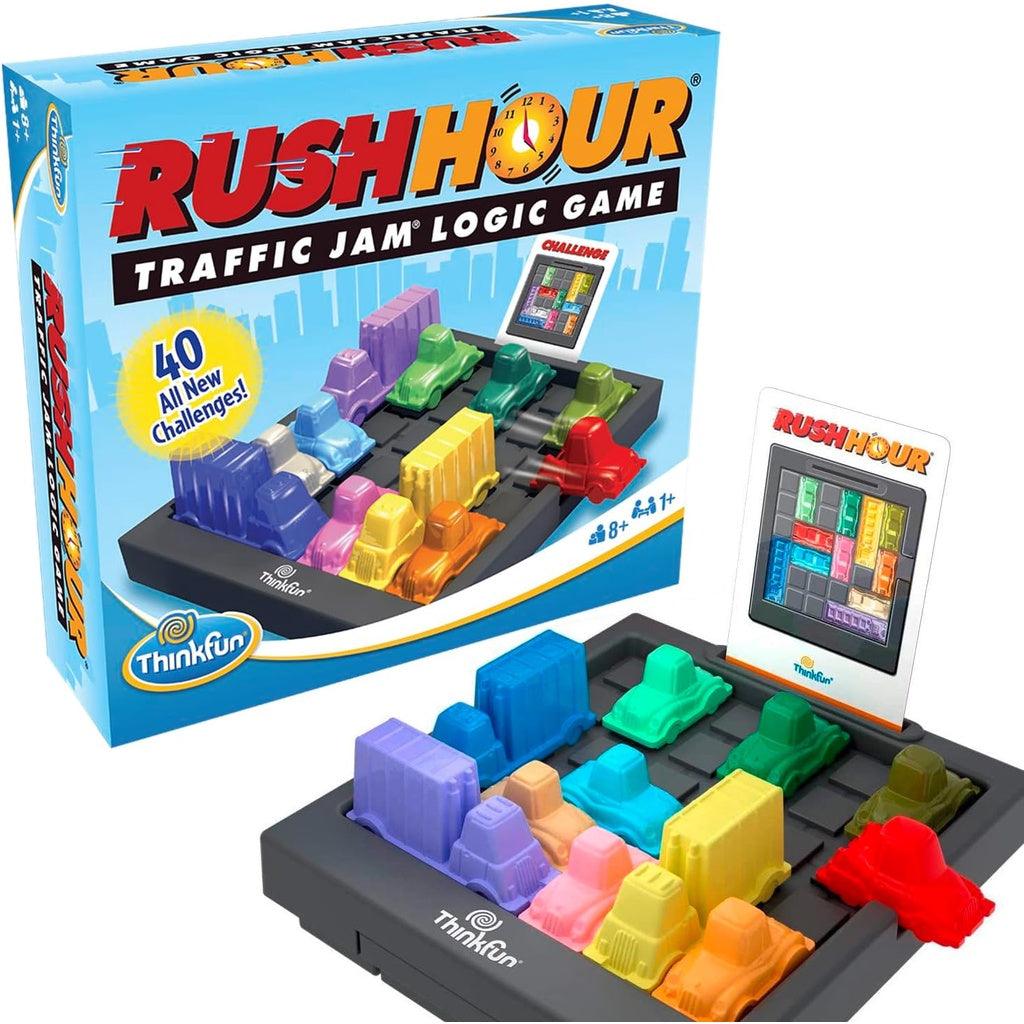
ThinkFun Rush Hour
Quiet logic focus and travel-friendly puzzles
Pros
- ✓ No batteries
- ✓ Portable
- ✓ Great thinking reps
Cons
- ✗ Single-player
- ✗ Can feel hard at first
- ✗ Needs progression support
Rush Hour is the best overall budget STEM pick because it teaches planning without feeling like schoolwork. The child sets up a traffic jam, moves one piece at a time, and learns that guessing is slower than thinking ahead. That makes it useful for kids who rush through tasks or get stuck using the same strategy.
Start below the child’s apparent level. Early success matters. If the first card feels impossible, the toy becomes a frustration object instead of a logic habit. For younger kids, compare this style with Mental Blox vs Rush Hour Junior for Logic Skills before assuming the standard version is the right starting point.
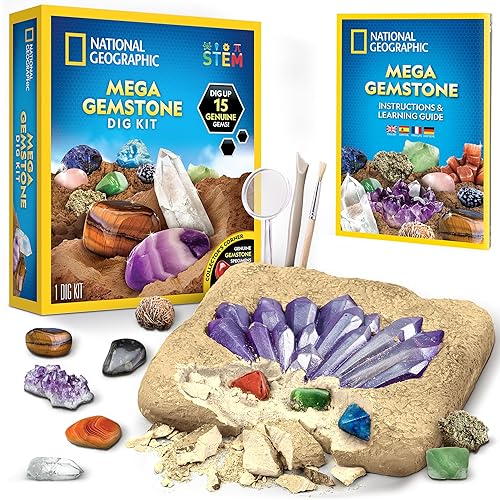
Low-frustration science with quick reveal moments
Pros
- ✓ Hands-on discovery
- ✓ Kid-friendly science
- ✓ Fun reveal moments
Cons
- ✗ Messy
- ✗ One-time core activity
- ✗ Needs cleanup
The fossil dig kit is not the highest-replay toy on the list, but it earns its place because the first session is memorable. Kids get a concrete science experience: scrape, brush, reveal, compare, and identify. That is a better STEM loop than a toy that only says “science” on the box.
The main downside is mess. Use a tray, newspaper, or outdoor table. If your child hates dusty hands or long excavation work, choose a logic or building toy instead. If they love specimens, rocks, dinosaurs, or “real discovery” play, this can be a strong gift even though the core activity is mostly one-time.
Sustained focus training disguised as fun
Pros
- ✓ Tactile and movement-based
- ✓ Strong 'one more try' loop
- ✓ Often cheaper than Beast
Cons
- ✗ Price varies by version
- ✗ Solo play only
- ✗ Can be overstimulating for some kids
Perplexus is a focus-and-motor-control toy more than a classic STEM kit. The child tilts the ball, watches the marble path, fails, adjusts pressure, and tries again. That loop builds patience, spatial prediction, and fine motor control. It is especially good for kids who need movement while thinking.
Watch the frustration level. Some children love the “one more try” feeling. Others get angry when the marble falls near the end. If your child needs calmer focus tools, start with Best Quiet Logic Toys for Apartments or Best Toys for Focus Breaks Between Homework.
Structured creativity that scales with age
Pros
- ✓ Huge replay value
- ✓ Scales with age
- ✓ Great imagination tool
Cons
- ✗ Cleanup friction
- ✗ Stepping hazard
- ✗ Can overwhelm if too many pieces out
LEGO Classic is the safest replay-value pick because it grows with the child. It can be free building, pattern copying, simple engineering, sorting, counting, symmetry, or story-based construction. For STEM value, do not dump the whole box on the floor and hope magic happens. Give a small challenge: build the tallest bridge, make a vehicle that rolls, copy this pattern, or design a marble gate.
The risk is choice overload. Too many pieces can make some kids scatter instead of build. Put a smaller amount in a tray and rotate colours or parts. If your child already owns LEGO but seems bored, Alternatives to LEGO Classic for Kids Who Need Variety has better next-step ideas than simply buying a larger box.
Plus-Plus Big Building Set
Fine-motor creative focus
Pros
- ✓ Compact
- ✓ Quiet tabletop use
- ✓ Strong concentration
Cons
- ✗ Smaller pieces
- ✗ Learning curve
- ✗ Can frustrate younger kids
Plus-Plus is excellent for quiet tabletop building. The pieces are small and repetitive, which can help some kids settle into sustained concentration. The STEM value is in pattern, symmetry, structure, and trial-and-error design. It is not as instantly obvious as LEGO, so the first win matters.
Start with flat mosaics or simple 3D builds before expecting complex models. If the child has fine-motor frustration, stay nearby for the first session. If they like pixel art, beads, pattern blocks, or tiny construction systems, Plus-Plus can become a surprisingly long-lasting budget option.
Silent tactile input on desks, notebooks, and devices
Pros
- ✓ Invisible in class
- ✓ No loose parts
- ✓ Great for quick regulation
Cons
- ✗ Adhesive wears over time
- ✗ Limited texture per strip
- ✗ Needs clean surfaces
Calm Strips are not STEM in the usual “build a robot” sense. They are included because budget STEM play often fails for regulation reasons, not intelligence reasons. A child who cannot sit through instructions, tolerate a tricky puzzle, or transition from school to homework may need a quiet tactile support before the STEM toy has any chance to work.
Use them on a notebook, desk edge, pencil box, or homework station. They pair well with Rush Hour, Plus-Plus, or short science sessions because the child can get finger input without turning the main toy into a fidget.
How to Choose Under $40
If you want the strongest pure thinking value, choose Rush Hour. If you want a memorable science gift, choose the fossil kit. If your child needs movement while thinking, choose Perplexus. If you want open-ended building, choose LEGO Classic or Plus-Plus. If attention and regulation are the barrier, add Calm Strips before buying another complicated kit.
Avoid the common budget trap: buying a toy because it looks impressive in the listing. Cheap robot kits, off-brand science sets, and “100 experiments” boxes can be fine, but only if the instructions are clear and the materials are actually usable. A smaller toy with a clean feedback loop usually beats a larger box that needs an adult to rescue every step.
Want better toy picks without the research rabbit hole?
Short, practical recommendations by age, need, and budget.
Practical Setup Tips
1) Keep only 3 to 5 toys visible
Fewer options usually means deeper play and less overwhelm. Put the rest away and rotate them weekly.
2) Use short play blocks
Try 15 to 25 minute sessions with a clear start and finish. Budget STEM toys work best when the child leaves wanting another turn, not when everyone pushes until frustration.
3) Pair movement with focus toys
A quick movement break before table play improves transitions. This matters more than most product listings admit.
4) Store by activity, not by box
Keep puzzle cards with puzzle pieces, science tools with trays or brushes, and building parts in containers kids can open independently. The easier it is to restart, the more often the toy gets used.
5) Add a tiny challenge card
Write simple prompts on index cards: build a bridge, solve one easy puzzle, make a pattern with three colours, or sort fossils by size. A clear challenge can turn a toy from “something to dump” into a real learning loop.
FAQ
Are these toys only for kids with a diagnosis?
No. These picks can help many kids who need better focus, calmer transitions, or lower-stimulation play. They are useful because they give clear feedback and manageable challenge, not because they belong to one diagnosis category.
How many toys should we use at one time?
Start with 3 to 5 active options. Too much visual choice can reduce sustained attention. Keep one logic toy, one building toy, one science or discovery toy, and one regulation support within easy reach.
What if my child gets bored quickly?
Use short sessions, rotate weekly, and focus on toys with immediate feedback and open-ended replay. If boredom is the main pattern, read Best Toys for Kids Who Get Bored Easily before buying a bigger STEM kit.
What is the best low-mess option?
Rush Hour, Calm Strips, and Plus-Plus are the easiest low-mess choices. Fossil kits are more memorable but need a tray and cleanup plan.
Related reads
- Best Gifts for Kids Under $25
- Best Toys for Kids Who Get Bored Easily
- Best Travel Toys for Airplanes with Kids
- Best STEM Toys for Kids Who Hate Worksheets
If You Can Only Buy One
ThinkFun Rush Hour.
It gives the best balance of low-friction setup, strong focus reps, and long-term replay for most households. It is not flashy, but it creates the kind of repeatable problem-solving practice that budget STEM toys are supposed to deliver.
Want better toy picks without the research rabbit hole?
Get concise recommendations by age, need, and budget.
Where to go next
By age
Best Toys for 4-Year-Olds (Learning Through Play) (2026)
Keep the recommendations age-appropriate for your kid’s stage.
By need
Gifts for Neurodivergent Kids: A Parent's Guide (2026)
Jump to picks focused on ADHD, sensory, and regulation support.
By budget
Best Gifts for Kids Under $25 (2026)
Compare strong options in lower price brackets before you buy.
Related Articles
Mental Blox vs Rush Hour Junior for Logic Skills
Compare two low-tech logic toys for kids who need more thinking reps without screens.
Read more →
Monster Scale vs Numberblocks MathLink Cubes for Preschool Math
Compare two hands-on math toys for early counting, number sense, and quiet learning play.
Read more →
Best Calm Waiting-Room Toys for Kids
Small quiet toys for appointments, restaurants, waiting rooms, and other moments where kids need help staying regulated.
Read more →