Best Screen-Free Toys for Rainy Days
Indoor toys that keep kids engaged on rainy days without defaulting to screens.
Snapshot
| Toy | Age | Price | Best for | Link |
|---|---|---|---|---|
| #1 Magna-Tiles Classic 100-Piece Set | 3+ | CAD $50–$80 | Open-ended building and creative focus | Check Price |
| #2 LEGO Classic Creative Brick Box | 4+ | CAD $35–$55 | Structured creativity that scales with age | Check Price |
| #3 Kinetic Sand Set | 3+ | CAD $25–$45 | Sensory regulation and transitions | Check Price |
| #4 ThinkFun Rush Hour | 8+ | CAD $20–$35 | Quiet logic focus and travel-friendly puzzles | Check Price |
Affiliate links. Prices can change.
Rainy-day boredom is mostly a setup problem. Kids do not usually need a huge new activity plan; they need a small set of toys that are easy to start, forgiving to repeat, and calm enough to use indoors without turning the house into chaos.
The best screen-free rainy-day toys give children something to build, sort, solve, squeeze, imagine, or test. They should work when everyone is stuck inside, energy is uneven, and parents do not have bandwidth to lead a full craft or science lesson.
Magna-Tiles Classic 100-Piece Set
Reliable engagement, low setup friction, and strong replay value for rainy days when kids need indoor play that does not require screens.
This guide focuses on toys that are practical, repeatable, and useful beyond the first rainy afternoon. The goal is not to entertain kids every second. It is to create a few easy play loops they can return to through the day.
What to Look For
- Fast entry. If setup is complicated, attention disappears and the screen request comes back.
- Indoor-friendly play. Rainy-day toys should not require big running space, loud impact, or constant adult rescue.
- Clear feedback. Kids stay engaged when they can see progress quickly: a tower, puzzle solution, sensory shape, scene, or circuit.
- Replay value. Good rainy-day toys can come out again next weekend without feeling finished.
- Easy reset. If cleanup takes longer than play, the toy will not get used often.
- Regulation support. The best picks help kids come down from cabin fever, not just stay busy.
Our Top Picks
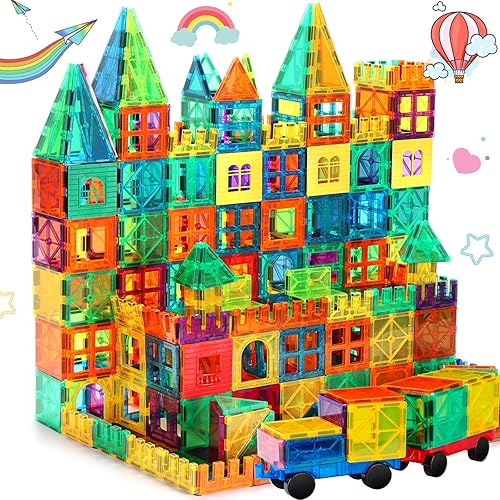
Open-ended building and creative focus
Pros
- ✓ Quiet play
- ✓ Long replay value
- ✓ Works solo or together
Cons
- ✗ Higher upfront cost
- ✗ Pieces scatter
- ✗ Needs storage bin
Magna-Tiles are the best overall rainy-day pick because they start quickly and scale across ages. A preschooler can build a box or animal house. An older child can design towers, garages, marble paths, towns, or challenges with symmetry and height. Siblings can play side by side without needing the same exact plan.
They are also calmer than many indoor toys. There are no batteries, no music, and no rules to memorize. The magnets give enough structure for fast success, while the open-ended pieces keep the play from feeling finished after one build.
The main parent job is containment. Use a basket or floor mat and make “tiles stay in this zone” part of the setup. If your child gets overwhelmed by a full 100-piece dump, start with 20 pieces and add more when play is already moving.
Structured creativity that scales with age
Pros
- ✓ Huge replay value
- ✓ Scales with age
- ✓ Great imagination tool
Cons
- ✗ Cleanup friction
- ✗ Stepping hazard
- ✗ Can overwhelm if too many pieces out
LEGO Classic is rainy-day insurance for kids who like detailed building. It works well because it can be used in short bursts or long projects. A child might build a tiny car in ten minutes, then later return to make a city, shop, maze, or creature.
For screen-free success, avoid the “giant pile on the floor” trap. Put a small mix of bricks in a tray and give a simple challenge: build a bridge for a toy animal, make a vehicle with four wheels, or create a tiny room. That structure helps kids start without turning the play into an adult-led lesson.
LEGO is less ideal for toddlers and families with younger siblings because of small pieces. It also needs firm cleanup rules. But for elementary-age kids, the replay value is hard to beat.
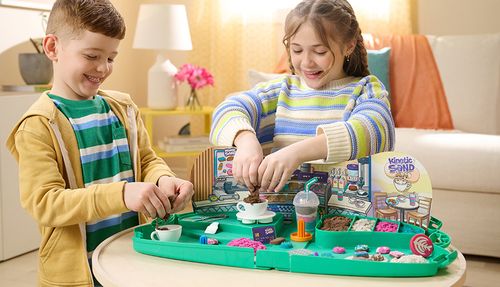
Kinetic Sand Set
Sensory regulation and transitions
Pros
- ✓ Very calming tactile input
- ✓ Low noise
- ✓ Easy start/stop
Cons
- ✗ Can get messy
- ✗ Best with tray
- ✗ Not ideal for carpet
Kinetic Sand earns its place because rainy days are not just boring; they can make kids dysregulated. Sand gives heavy tactile input, slow hand work, and a satisfying reset when emotions run hot.
The trick is to treat it like a contained sensory station. Use a rimmed tray, baking sheet, or shallow bin. Add a few tools only: a scoop, small cup, animal figure, or mould. Too many accessories can make cleanup worse and play less focused.
This is especially useful after lunch, after a failed outing, or during the late-afternoon stretch when kids start bouncing off furniture. If sensory regulation is the main need, also see Calm-Down Corner Toys That Actually Help and Calm Toys for Kids with Big Feelings.
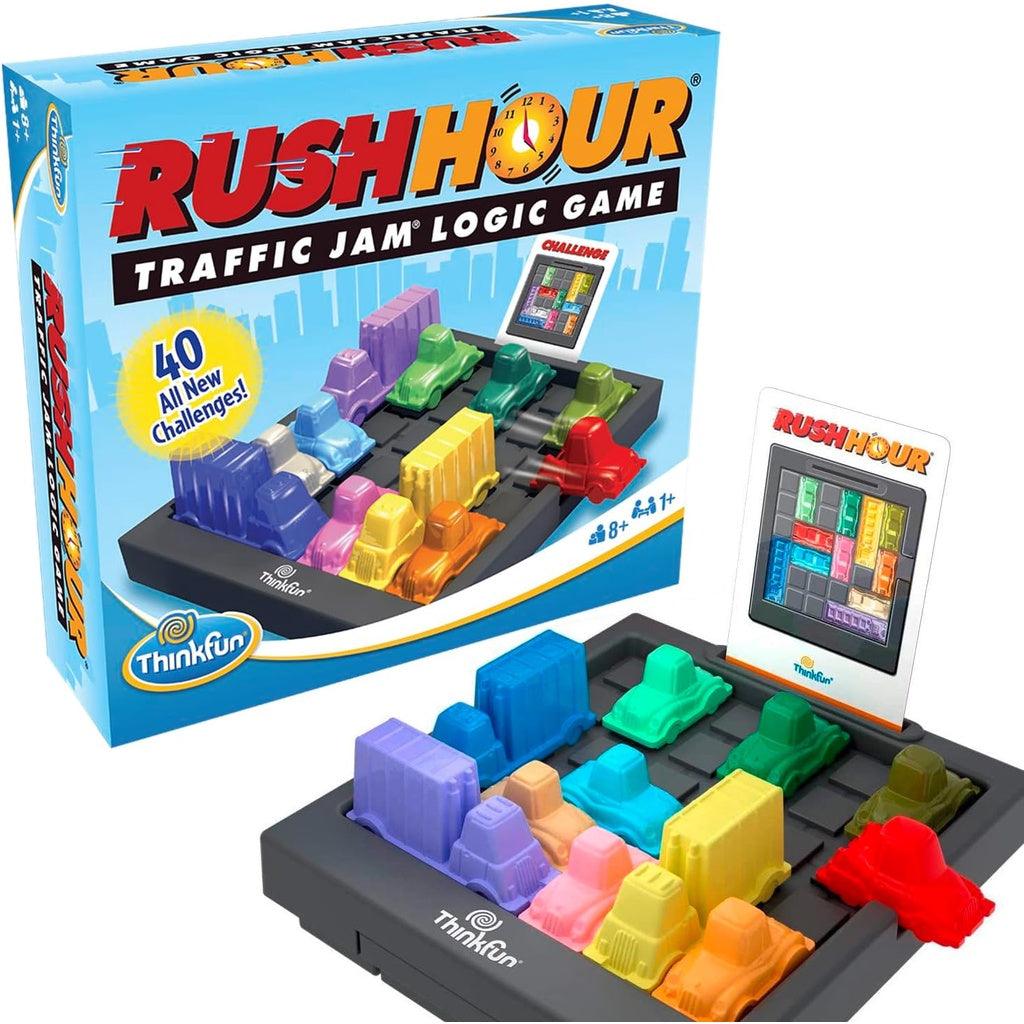
ThinkFun Rush Hour
Quiet logic focus and travel-friendly puzzles
Pros
- ✓ No batteries
- ✓ Portable
- ✓ Great thinking reps
Cons
- ✗ Single-player
- ✗ Can feel hard at first
- ✗ Needs progression support
Rush Hour is a strong rainy-day choice for kids who need quiet focus rather than open-ended play. The board is small, the pieces stay contained, and the challenge cards create a clear progression. It is the opposite of vague boredom: here is the puzzle, solve the traffic jam.
It works best when adults protect the difficulty curve. Start with beginner cards, even if your child is older. The point is to create success and concentration, not prove the puzzle is hard. If frustration rises, model one move and step back.
Because it is single-player, Rush Hour is not the toy that will occupy three siblings together. It is better as a calm station during a noisy indoor day or as a reset after more active play. For more quiet thinking picks, see Best Quiet Logic Toys for Apartments.
Portable quiet play for travel and waiting rooms
Pros
- ✓ Very affordable
- ✓ Travel friendly
- ✓ Instant setup
Cons
- ✗ Sticker loss
- ✗ Shorter sessions
- ✗ Theme-limited
Reusable sticker pads are not deep toys, but they are excellent rainy-day fillers. They start instantly, work at the table, and let younger kids create scenes without glue, markers, or cutting. They are also useful when one child needs something quiet while another child builds.
The limitation is session length. Many kids will play for 10 to 20 minutes, not an entire afternoon. That is fine if you use the pad as one station in a rotation. Try “make a silly scene,” “make a grocery store,” or “tell me what is happening in this picture” to extend the play without turning it into a school assignment.
Keep a large zip bag nearby for loose stickers. The biggest frustration is losing pieces, not the play itself.
Snap Circuits Jr. SC-100
Hands-on logic and electronics
Pros
- ✓ Clear challenge progression
- ✓ High educational value
- ✓ Strong replay
Cons
- ✗ Can frustrate younger kids
- ✗ Needs organization
- ✗ Best with guidance early
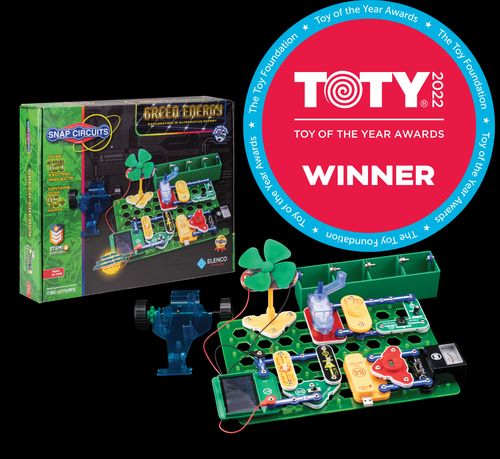
Snap Circuits is the rainy-day pick for older kids who want a project with a payoff. The pieces snap onto a board, the diagrams show what to build, and the result is concrete: a light, fan, switch, or sound.
It is screen-free but still feels technical, which can be important for kids who reject “little kid” indoor activities. The best first session is short. Choose one easy project, help sort the pieces, and stop after success rather than pushing through the whole booklet.
This set needs organization. If pieces get mixed with other toys, the next session becomes frustrating. Use the original tray or a labelled box and keep it away from younger siblings.
Build a Rainy-Day Toy Rotation
The strongest rainy-day setup is not one magic toy. It is three different play modes:
1. A build mode for longer engagement, such as Magna-Tiles or LEGO.
2. A calm mode for regulation, such as Kinetic Sand or a quiet puzzle.
3. A quick reset mode for short gaps, such as reusable stickers or a small logic game.
Put one option from each mode in easy reach and keep the rest hidden. When everything is visible, kids often graze without settling. When the choices are simple, they are more likely to start.
This is also why rainy-day toys should not all be high-energy. If every option creates noise and movement, the house gets harder to manage. Mix active imagination with quiet concentration and sensory calm.
Want better toy picks without the research rabbit hole?
Short, practical recommendations by age, need, and budget.
Practical Setup Tips
1) Create zones, not a schedule
A rainy-day schedule can fall apart quickly. Zones are easier: a building zone on the floor, a sensory tray at the table, and a quiet puzzle spot on the couch or desk. Kids can move between zones without needing you to invent a new activity every hour.
2) Use short play blocks
Try 15 to 25 minute sessions with a clear start and finish. Younger kids may need a reset between play blocks: snack, movement, reading, or a small job.
3) Pair movement with focus toys
Before table play, give kids a body reset: animal walks down the hallway, couch cushion obstacle course, laundry basket push, or a timed tidy race. Then move into LEGO, Rush Hour, stickers, or circuits. If movement breaks are a recurring need, use Best Toys for Focus Breaks Between Homework for more ideas.
4) Make cleanup part of the toy
Rainy days go better when cleanup is automatic. Use one bin per system. Do not mix LEGO with Magna-Tiles, sand tools with puzzle pieces, or stickers with everything else. A toy that can be reset in two minutes is much more likely to come out again.
FAQ
What age are these rainy-day toys best for?
Magna-Tiles, Kinetic Sand, and reusable sticker pads can work well for preschoolers with supervision. LEGO Classic fits many kids from age 4+, while Rush Hour and Snap Circuits are better for older elementary kids who can handle rules and instructions.
How do I keep screen-free play from becoming parent-led all day?
Set up the first five minutes, then step back. Give a prompt, not a lesson. If the child needs constant adult direction, simplify the toy choice or reduce the number of pieces.
What if my child gets bored quickly?
Use rotation instead of adding more toys. Put one option away before introducing the next. Also change the prompt: build for a stuffed animal, make a rescue scene, solve one beginner card, or create a tiny town.
Are messy sensory toys worth it on rainy days?
They can be, but only with containment. Kinetic Sand on a tray is very different from sand across the living-room carpet. If mess triggers stress, choose Magna-Tiles, Rush Hour, or reusable stickers instead.
Related reads
- Best Gifts for Kids Under $25
- Best Toys for Kids Who Get Bored Easily
- Best Travel Toys for Airplanes with Kids
- Screen-Free Toys for Kids
- Best Quiet Toys for Apartments
If You Can Only Buy One
Magna-Tiles Classic 100-Piece Set.
It gives the best balance of calm engagement, flexible building, sibling-friendly play, and long-term replay for rainy days when the screen request keeps coming back.
Want better toy picks without the research rabbit hole?
Get concise recommendations by age, need, and budget.
Where to go next
By age
Best Toys for 4-Year-Olds (Learning Through Play) (2026)
Keep the recommendations age-appropriate for your kid’s stage.
By need
Gifts for Neurodivergent Kids: A Parent's Guide (2026)
Jump to picks focused on ADHD, sensory, and regulation support.
By budget
Best Gifts for Kids Under $25 (2026)
Compare strong options in lower price brackets before you buy.
Related Articles
Mental Blox vs Rush Hour Junior for Logic Skills
Compare two low-tech logic toys for kids who need more thinking reps without screens.
Read more →
Monster Scale vs Numberblocks MathLink Cubes for Preschool Math
Compare two hands-on math toys for early counting, number sense, and quiet learning play.
Read more →
Best Calm Waiting-Room Toys for Kids
Small quiet toys for appointments, restaurants, waiting rooms, and other moments where kids need help staying regulated.
Read more →