Best Toys for Kids Under $30
Affordable toy picks under $30 with real replay value, not just impulse buys.

Snapshot
| Toy | Age | Price | Best for | Link |
|---|---|---|---|---|
| #1 Fat Brain Toys Dimpl | 1+ | CAD $15–$25 | Silent desk fidget for sustained focus | Check Price |
| #2 LeapFrog Learning Friends 100 Words Book | 18 months+ | CAD $20–$30 | Early vocabulary and guided language play | Check Price |
| #3 Melissa & Doug Reusable Sticker Pad | 3+ | CAD $8–$17 | Portable quiet play for travel and waiting rooms | Check Price |
| #4 Munchables Sensory Chew Necklace | 3+ | CAD $18–$30 | Wearable chew tool for ongoing oral sensory needs | Check Price |
Affiliate links. Prices can change.
At this price point, the goal is high replay and low regret. A few great picks beat a pile of cheap clutter.
The right toy can lower friction, support regulation, and make day-to-day life noticeably easier.
This guide focuses on toys that are practical, repeatable, and useful beyond the first week.
Fat Brain Toys Dimpl
A strong first pick for this situation because it is easy to start, easy to repeat, and useful beyond the first week.
What to Look For
- Fast entry. If setup is complicated, attention disappears.
- Clear feedback. Kids stay engaged when they can see progress quickly.
- Replay value. Good toys survive past the novelty spike.
- Regulation support. The best toys help kids recover, not just stay busy.
Our Top 6 Picks
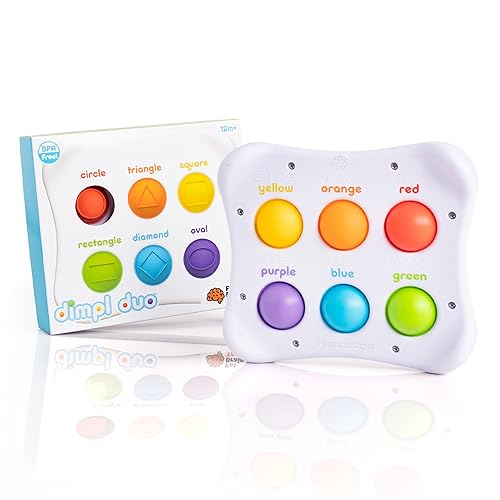
Fat Brain Toys Dimpl
Silent desk fidget for sustained focus
Pros
- ✓ Truly silent
- ✓ Durable
- ✓ Pocket-size
Cons
- ✗ Short play windows
- ✗ Skews younger
- ✗ Limited challenge
Early vocabulary and guided language play
Pros
- ✓ Strong language outcomes
- ✓ Simple interaction model
- ✓ Trusted learning brand
Cons
- ✗ Skews younger
- ✗ Can feel repetitive for older kids
- ✗ Audio can be loud
Portable quiet play for travel and waiting rooms
Pros
- ✓ Very affordable
- ✓ Travel friendly
- ✓ Instant setup
Cons
- ✗ Sticker loss
- ✗ Shorter sessions
- ✗ Theme-limited
Wearable chew tool for ongoing oral sensory needs
Pros
- ✓ Always available
- ✓ Looks like jewelry
- ✓ Easy to clean
Cons
- ✗ Not for under 3
- ✗ Cord can break with hard use
- ✗ Visible at school
Hape Math Monster Scale
Hands-on weight comparison, counting, and early addition
Pros
- ✓ Concrete math play
- ✓ Good preschool fit
- ✓ Quiet tabletop setup
Cons
- ✗ Skews young
- ✗ Small loose weights
- ✗ Limited challenge for older kids
Plus-Plus Big Building Set
Fine-motor creative focus
Pros
- ✓ Compact
- ✓ Quiet tabletop use
- ✓ Strong concentration
Cons
- ✗ Smaller pieces
- ✗ Learning curve
- ✗ Can frustrate younger kids
Why These Picks Made the List
Fat Brain Toys Dimpl
Fat Brain Toys Dimpl works here because it supports silent desk fidget for sustained focus without turning the routine into a project. Families mostly get truly silent and durable.
It works best with a clear start and stop instead of being left open-ended, especially because short play windows and skews younger.
LeapFrog Learning Friends 100 Words Book
LeapFrog Learning Friends 100 Words Book belongs here for early vocabulary and guided language play. In practice, the appeal is strong language outcomes and simple interaction model.
Keep the play window short and purposeful so it supports the routine rather than becoming another distraction; the usual tradeoffs are skews younger and can feel repetitive for older kids.
Melissa & Doug Reusable Sticker Pad
What makes Melissa & Doug Reusable Sticker Pad practical is its support for portable quiet play for travel and waiting rooms. Its strongest points are very affordable and travel friendly.
Treat it as a targeted reset, not something that has to carry the whole afternoon. The main limits are sticker loss and shorter sessions.
Munchables Sensory Chew Necklace
Munchables Sensory Chew Necklace earns a spot because it can cover wearable chew tool for ongoing oral sensory needs with very little explanation. It is especially useful for always available and looks like jewelry.
The fit is better when expectations are simple and the session is defined, since not for under 3 and cord can break with hard use.
Hape Math Monster Scale
Hape Math Monster Scale is most useful when the goal is hands-on weight comparison, counting, and early addition. Compared with more complicated options, it brings concrete math play and a quiet tabletop setup.
If your home can live with small loose weights and a younger age skew, it is a stronger under-$30 fit than many flashy “learning” toys that lose value after one afternoon.
Plus-Plus Big Building Set
For this kind of routine, Plus-Plus Big Building Set gives families a simple path into fine-motor creative focus. The best parts are compact and quiet tabletop use.
Use it for a specific moment rather than as a vague boredom fix, and plan around smaller pieces and learning curve.
How to Spend Under $30 Without Buying Clutter
Under-$30 toys are where cheap and useful can look very similar on the product page. The best filter is not “will my kid notice this?” It is “will this still have a job after the first day?”
Choose Dimpl when you need a quiet, durable fidget that can live in a bag, car, or homework drawer. It is not a deep play system, but it has a clean sensory job and almost no setup cost.
Choose the 100 Words Book only for toddlers and young preschoolers. It is a strong value in that lane, but it is the wrong buy for older kids even if the price looks good.
Choose the Reusable Sticker Pad for travel, restaurants, waiting rooms, or calm solo play. It is cheap enough to be low-risk, but the replay depends heavily on whether your child likes scene-building.
Choose Munchables when there is a real chewing/oral-sensory need. It is not a general toy purchase; it is a specific support tool. That makes it valuable for the right child and unnecessary for everyone else.
Choose Hape Math Monster Scale or Plus-Plus when you want more learning value. The scale is better for younger kids who need concrete math. Plus-Plus is better for fine-motor creative focus and older kids who like small construction pieces.
Best Value by Use Case
For a stocking stuffer or waiting-room tool, pick Dimpl or the Sticker Pad. For a toddler learning toy, pick the 100 Words Book. For sensory support, pick Munchables only if chewing is actually part of the child’s day. For learning-through-play, pick Hape Math Monster Scale for early math or Plus-Plus for building.
The big rule: avoid buying six cheap toys just because each one is under $30. One useful under-$30 toy beats a basket of low-replay clutter.
For tighter budget lists, see Best Gifts for Kids Under $25. If sensory support is the real reason you are shopping, Best Budget Sensory Toys Under $20 is the better next read.
Want better toy picks without the research rabbit hole?
Short, practical recommendations by age, need, and budget.
Practical Setup Tips
1) Keep only 3 to 5 toys visible
Fewer options usually means deeper play and less overwhelm.
2) Use short play blocks
Try 15 to 25 minute sessions with a clear start and finish.
3) Pair movement with focus toys
A quick movement break before table play improves transitions.
4) Rotate weekly
Rotation keeps engagement high without constant new purchases.
FAQ
Are these toys only for kids with a diagnosis?
No. These picks can help many kids who need better focus, calmer transitions, or lower stimulation play.
How many toys should we use at one time?
Start with 3 to 5 active options. Too much visual choice can reduce sustained attention.
What if my child gets bored quickly?
Use short sessions, rotate weekly, and focus on toys with immediate feedback and open-ended replay.
Related reads
Want better toy picks without the research rabbit hole?
Get concise recommendations by age, need, and budget.
Where to go next
By age
Best Toys for 4-Year-Olds (Learning Through Play) (2026)
Keep the recommendations age-appropriate for your kid’s stage.
By need
Gifts for Neurodivergent Kids: A Parent's Guide (2026)
Jump to picks focused on ADHD, sensory, and regulation support.
By budget
Best Gifts for Kids Under $25 (2026)
Compare strong options in lower price brackets before you buy.
Related Articles
Mental Blox vs Rush Hour Junior for Logic Skills
Compare two low-tech logic toys for kids who need more thinking reps without screens.
Read more →
Monster Scale vs Numberblocks MathLink Cubes for Preschool Math
Compare two hands-on math toys for early counting, number sense, and quiet learning play.
Read more →
Best Calm Waiting-Room Toys for Kids
Small quiet toys for appointments, restaurants, waiting rooms, and other moments where kids need help staying regulated.
Read more →