Best After-School Reset Toys for 5-Year-Olds
Transition-friendly toys to help 5-year-olds decompress after school before homework and dinner.
Snapshot
| Toy | Age | Price | Best for | Link |
|---|---|---|---|---|
| #1 Sensory Body Sock | 3+ | CAD $35–$55 | Proprioceptive input for short movement resets | Check Price |
| #2 Liquid Motion Bubbler Timer | 3+ | CAD $15–$25 | Visual calming during short reset breaks | Check Price |
| #3 hand2mind Express Your Feelings Sensory Bottles | 3+ | CAD $35–$55 | Emotion naming + sensory calming routines | Check Price |
| #4 Weighted Lap Pad | 4+ | CAD $25–$45 | Deep-pressure input during homework, meals, and regulation breaks | Check Price |
Affiliate links. Prices can change.
After school, a short body-input reset can work better than another sit-still toy. Many five-year-olds hold themselves together through noise, instructions, lining up, group play, and big feelings all day. By the time they get home, the problem is often not “bad behaviour.” It is a nervous system that needs food, pressure, movement, quiet, or a predictable landing.
The right toy can lower friction, support regulation, and make the late-afternoon routine noticeably easier. The best after-school reset toys do not need a long setup, do not create a huge cleanup job before dinner, and do not make the child fight harder when it is time to move on.
Sensory Body Sock
Reliable engagement, low setup friction, and strong replay value for real family routines.
This guide focuses on toys that are practical, repeatable, and useful beyond the first week. Use them as a bridge between school and home life: snack, reset, one small play loop, then the next routine.
What to Look For
- Fast entry. If setup is complicated, attention disappears and the reset becomes another demand.
- Clear feedback. Kids stay engaged when they can feel or see progress quickly: pressure, bubbles, movement, a completed sticker scene, or a calmer body.
- Replay value. Good reset toys survive past the novelty spike because they fit ordinary afternoons.
- Regulation support. The best toys help kids recover, not just stay busy.
- A manageable exit. Avoid anything so exciting that dinner, homework, bath, or bedtime becomes the next battle.
For five-year-olds, after-school reset time should usually be short and protected. Think 10 to 25 minutes, not an open-ended free-for-all. The goal is to help your child come back to themselves before the evening asks more of them.
Our Top 6 Picks
Sensory Body Sock
Proprioceptive input for short movement resets
Pros
- ✓ Deep-pressure movement
- ✓ Good for sensory seekers
- ✓ Can turn breaks into regulation reps
Cons
- ✗ Needs supervision and clear rules
- ✗ Sizing matters
- ✗ Not discreet for school
Liquid Motion Bubbler Timer
Visual calming during short reset breaks
Pros
- ✓ Quiet visual input
- ✓ Low setup
- ✓ Good calm-down corner fit
Cons
- ✗ Can leak if damaged
- ✗ Mostly passive
- ✗ Some kids lose interest quickly
Emotion naming + sensory calming routines
Pros
- ✓ Connects SEL + sensory support
- ✓ Great for transitions
- ✓ Strong teacher/therapist use case
Cons
- ✗ Higher cost than basic fidgets
- ✗ Less open-ended than building toys
- ✗ Works best with adult prompting
Weighted Lap Pad
Deep-pressure input during homework, meals, and regulation breaks
Pros
- ✓ Grounding pressure input
- ✓ No setup needed
- ✓ Works across routines
Cons
- ✗ Too heavy for some kids
- ✗ Not ideal for travel
- ✗ Needs correct weight selection
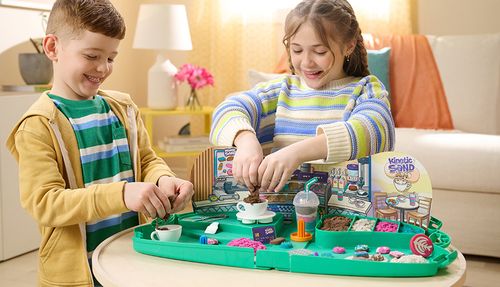
Kinetic Sand Deluxe Set
Sensory regulation and transitions
Pros
- ✓ Very calming tactile input
- ✓ Low noise
- ✓ Easy start/stop
Cons
- ✗ Can get messy
- ✗ Best with tray
- ✗ Not ideal for carpet
Portable quiet play for travel and waiting rooms
Pros
- ✓ Very affordable
- ✓ Travel friendly
- ✓ Instant setup
Cons
- ✗ Sticker loss
- ✗ Shorter sessions
- ✗ Theme-limited
Why These Picks Made the List
Sensory Body Sock
Sensory Body Sock is the strongest pick for five-year-olds who crash into furniture, roll on the floor, hang off adults, or seem to need their whole body involved before they can calm down. It gives proprioceptive input: the deep body feedback many sensory seekers crave after a long school day.
Use it with clear rules: feet on the floor, no stairs, no covering the face for long periods, and an adult nearby. Sizing matters, and not every child likes the enclosed feeling. For the right child, though, it can turn wild post-school energy into a contained movement reset.
Liquid Motion Bubbler Timer
Liquid Motion Bubbler Timer works when the after-school problem is overstimulation rather than under-stimulation. If your child comes home glassy-eyed, irritable, or unable to answer questions, a quiet visual tool may be better than asking them to talk.
Flip it once after snack and let the bubbles fall. That gives a natural finish line before the next step. The risk is that it is passive; kids who need heavy movement may watch it for 20 seconds and then start climbing the couch. Pair it with a body sock or yoga card if visual input alone is not enough.
hand2mind Express Your Feelings Sensory Bottles
hand2mind Express Your Feelings Sensory Bottles are useful when the post-school mood is hard to name. A five-year-old may not say, “I am disappointed that recess was hard and the classroom was loud.” They may whine, refuse, or melt down over the wrong cup.
The bottles give you a gentler entry point: “Which bottle feels like your body?” That can lead to one sentence, one breath, or simply a calmer moment. They are more expensive than basic fidgets and work best with adult prompting, but the emotion connection makes them more useful than a random sensory toy.
Weighted Lap Pad
Weighted Lap Pad is a practical bridge from active school energy to sitting routines. Use it during snack, story time, homework prep, or dinner waiting, especially for kids who seek pressure or like being tucked under blankets.
Do not use weight as a restraint. The child should be able to remove it easily, and the weight should be appropriate for their size. When it fits, a lap pad can reduce wandering and help the evening feel less scattered.
Kinetic Sand Deluxe Set
Kinetic Sand Deluxe Set gives tactile input without the noise of a big building set or the intensity of screen time. For after school, the key is containment. Use a tray, a washable mat, and a small amount of sand rather than opening every mould and accessory at once.
It is calming for many kids because the hands stay busy while the body settles. The downside is mess risk, especially on carpet or near dinner prep. If cleanup battles are common in your house, keep this as a weekend or supervised kitchen-table reset rather than the daily default.
Melissa & Doug Reusable Sticker Pad
Melissa & Doug Reusable Sticker Pad is the lightest option here. It is not a deep sensory reset, but it can help a tired five-year-old shift into quiet play while a parent makes dinner or unloads backpacks.
For after school, use one page at a time. Too many backgrounds and sticker sheets can become visual clutter. A small, finishable scene gives the child a sense of control without turning the whole room into a project.
Build a Better After-School Reset Window
A good after-school routine usually starts before the toy. Try this order: connection, snack, body or sensory reset, then requests. If the first words at pickup are a stream of questions or reminders, many kids shut down. Give the nervous system a minute before asking for school stories, homework effort, or chore cooperation.
The reset toy should match the state you see. If your child is loud, crashing, or seeking pressure, start with the body sock or another heavy-work idea. If they are tearful, quiet, or overloaded, start with the bubbler or feelings bottles. If they are hungry and clingy, snack may be the real intervention and the toy comes after.
It also helps to make the exit predictable. “Body sock for five crawls, then snack.” “Bubbler once, then shoes in the basket.” “One sticker scene, then dinner.” You are not trying to end play quickly; you are trying to make the next step unsurprising.
For older siblings or homework-heavy evenings, see Best Toys for Focus Breaks Between Homework. For a broader sensory setup, Best Calm-Down Toys for After School covers more age ranges.
Want better toy picks without the research rabbit hole?
Short, practical recommendations by age, need, and budget.
Practical Setup Tips
1) Keep only 3 to 5 toys visible
Fewer options usually means deeper play and less overwhelm. After school is not the time to open every bin. Choose one movement tool, one quiet visual tool, and one hands-on activity.
2) Use short play blocks
Try 10 to 25 minute sessions with a clear start and finish. Five-year-olds often do better with a visible ending than a vague “play until dinner.”
3) Pair movement with quiet toys
A quick movement break before table play improves transitions. Many kids need the body reset before the sticker pad, puzzle, book, or dinner chair can work.
4) Protect the first 15 minutes
If possible, avoid starting homework, cleanup, or heavy questions immediately. The first 15 minutes after school are often about decompression, not productivity.
5) Rotate weekly
Rotation keeps engagement high without constant new purchases. Keep the routine stable, but swap the specific tool when interest drops.
FAQ
Are these toys only for kids with a diagnosis?
No. These picks can help many kids who need better focus, calmer transitions, or lower stimulation play. They can also be useful for children with ADHD, autism, sensory processing differences, anxiety, or simple end-of-day fatigue.
How many toys should we use at one time?
Start with 3 to 5 active options. Too much visual choice can reduce sustained attention and make the after-school crash worse.
What if my child gets bored quickly?
Use short sessions, rotate weekly, and focus on toys with immediate feedback and open-ended replay. If boredom happens in two minutes, check whether your child needs food, sleep, outdoor movement, or lower demands first.
Should screens be part of the after-school reset?
They can feel like the fastest reset, but they often make the next transition harder for sensitive kids. If screens are part of your routine, use a predictable time limit and consider a sensory bridge afterward.
Related reads
- Best Calm-Down Toys for After School
- Best Toys for Kids with Transition Struggles
- Best Bedroom Calm Toys for Night Routine
- Best Toys for Focus Breaks Between Homework
- Best No-Mess Sensory Toys for Bedrooms
If You Can Only Buy One
Sensory Body Sock.
It gives the best balance of calm engagement, flexibility, and long-term replay for many five-year-olds who come home needing deep movement before they can settle into the evening.
Want better toy picks without the research rabbit hole?
Get concise recommendations by age, need, and budget.
Where to go next
By age
Best Screen-Free Weekend Toys for 5-Year-Olds
Keep the recommendations age-appropriate for your kid’s stage.
By need
Gifts for Neurodivergent Kids: A Parent's Guide (2026)
Jump to picks focused on ADHD, sensory, and regulation support.
By budget
Best Gifts for Kids Under $25 (2026)
Compare strong options in lower price brackets before you buy.
Related Articles
Best Toys for Kids Who Rush Through Homework
Focus-break and thinking toys for kids who hurry through homework, guess quickly, or need practice slowing down.
Read more →
Best No-Mess Sensory Toys for Bedrooms
Low-mess sensory toys that can live near the bed without sand, slime, batteries, or cleanup fights.
Read more →
Calm Strips vs Marble Mesh Fidget for Classroom Focus
A quiet fidget comparison for school, homework, and kids who need discreet tactile input.
Read more →