Best Screen-Free Weekend Toys for 8-Year-Olds
Screen-free toy picks that keep 8-year-olds engaged indoors with less power struggle.
Snapshot
| Toy | Age | Price | Best for | Link |
|---|---|---|---|---|
| #1 ThinkFun Roller Coaster Challenge | 6+ | CAD $45–$70 | Engineering logic through build-and-test coaster puzzles | Check Price |
| #2 Learning Resources Mental Blox Critical Thinking Game | 5+ | CAD $35–$55 | Spatial logic, following directions, and co-solving | Check Price |
| #3 ThinkFun Rush Hour | 8+ | CAD $20–$35 | Quiet logic focus and travel-friendly puzzles | Check Price |
| #4 Educational Insights Kanoodle 3D | 7+ | CAD $18–$30 | Pocket-size spatial reasoning puzzles | Check Price |
Affiliate links. Prices can change.
By eight, screen-free weekends need more than "go play with toys." Kids this age can handle real puzzles, bigger builds, longer projects, and early strategy, but they still hit the same friction points: boredom, sibling conflict, hard starts, and the feeling that a tablet would be easier.
The best screen-free weekend toys create momentum quickly and then leave room for depth. They give an 8-year-old a concrete challenge, a visible build, or a quiet hands-on activity that can restart after lunch, chores, errands, or a rough sibling moment. The goal is not to fill every hour. The goal is to give the day enough strong off-screen anchors that screens stop being the default solution to every gap.
ThinkFun Roller Coaster Challenge
Reliable engagement, low setup friction, and strong replay value for real family routines.
This guide focuses on screen-free toys that are practical, repeatable, and useful beyond the first weekend: logic puzzles, building systems, compact creative play, and calmer options that work in normal homes. If your weekend pain point is rainy-day restlessness, also see Best Screen-Free Toys for Rainy Days.
What to Look For
- Fast entry. If setup is complicated, attention disappears.
- Clear feedback. Kids stay engaged when they can see progress quickly.
- Replay value. Good toys survive past the novelty spike.
- Regulation support. The best toys help kids recover, not just stay busy.
- Enough challenge. Eight-year-olds often need a real problem to solve, not only pretend novelty.
- Flexible session length. A good weekend toy can support ten minutes or an hour.
- Cleanup realism. Screen-free play fails when the adult pays for it with a giant room reset.
The weekend kit should have one big-build option, one quiet challenge, and one reset toy. That combination covers most family moments: a long morning, a restaurant or waiting-room gap, a sibling argument, and the late-afternoon slump when everyone is tired.
Our Top 6 Picks
Engineering logic through build-and-test coaster puzzles
Pros
- ✓ Clear challenge progression
- ✓ Great cause-and-effect feedback
- ✓ Stronger novelty than another circuit kit
Cons
- ✗ Pieces need organization
- ✗ One-player-at-a-time tendency
- ✗ Harder cards may need help
Spatial logic, following directions, and co-solving
Pros
- ✓ Good group/sibling play
- ✓ Strong spatial reasoning
- ✓ Low-tech and classroom-friendly
Cons
- ✗ Requires reading or verbal prompts
- ✗ Pieces can scatter
- ✗ Less flashy as a gift
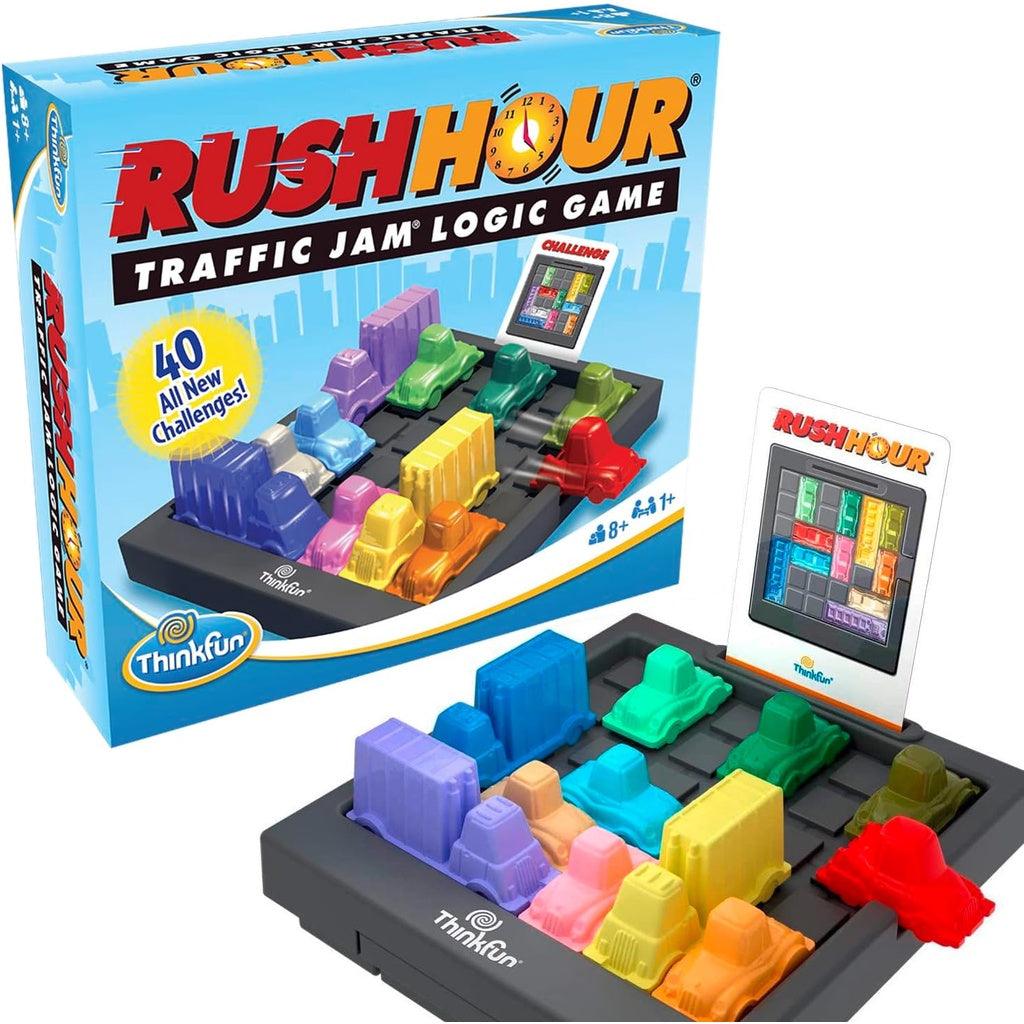
ThinkFun Rush Hour
Quiet logic focus and travel-friendly puzzles
Pros
- ✓ No batteries
- ✓ Portable
- ✓ Great thinking reps
Cons
- ✗ Single-player
- ✗ Can feel hard at first
- ✗ Needs progression support
Pocket-size spatial reasoning puzzles
Pros
- ✓ Tiny footprint
- ✓ No setup beyond opening the case
- ✓ Many challenge levels
Cons
- ✗ Small pieces
- ✗ Mostly solo play
- ✗ Harder puzzles can frustrate
Plus-Plus Big Building Set
Fine-motor creative focus
Pros
- ✓ Compact
- ✓ Quiet tabletop use
- ✓ Strong concentration
Cons
- ✗ Smaller pieces
- ✗ Learning curve
- ✗ Can frustrate younger kids
Structured creativity that scales with age
Pros
- ✓ Huge replay value
- ✓ Scales with age
- ✓ Great imagination tool
Cons
- ✗ Cleanup friction
- ✗ Stepping hazard
- ✗ Can overwhelm if too many pieces out
Why These Picks Made the List
ThinkFun Roller Coaster Challenge
ThinkFun Roller Coaster Challenge is here for engineering logic through build-and-test coaster puzzles. The useful part is clear challenge progression and great cause-and-effect feedback, not just that it looks good in a gift guide.
Before buying, watch for pieces need organization and one-player-at-a-time tendency. That is the difference between a toy that gets used and a toy that becomes shelf clutter.
Learning Resources Mental Blox Critical Thinking Game
Learning Resources Mental Blox Critical Thinking Game is here for spatial logic, following directions, and co-solving. The useful part is good group/sibling play and strong spatial reasoning, not just that it looks good in a gift guide.
Before buying, watch for requires reading or verbal prompts and pieces can scatter. That is the difference between a toy that gets used and a toy that becomes shelf clutter.
ThinkFun Rush Hour
ThinkFun Rush Hour is here for quiet logic focus and travel-friendly puzzles. The useful part is no batteries and portable, not just that it looks good in a gift guide.
Before buying, watch for single-player and can feel hard at first. That is the difference between a toy that gets used and a toy that becomes shelf clutter.
Educational Insights Kanoodle 3D
Educational Insights Kanoodle 3D is here for pocket-size spatial reasoning puzzles. The useful part is tiny footprint and no setup beyond opening the case, not just that it looks good in a gift guide.
Before buying, watch for small pieces and mostly solo play. That is the difference between a toy that gets used and a toy that becomes shelf clutter.
Plus-Plus Big Building Set
Plus-Plus Big Building Set is here for fine-motor creative focus. The useful part is compact and quiet tabletop use, not just that it looks good in a gift guide.
Before buying, watch for smaller pieces and learning curve. That is the difference between a toy that gets used and a toy that becomes shelf clutter.
LEGO Classic Medium Creative Brick Box
LEGO Classic Medium Creative Brick Box is here for structured creativity that scales with age. The useful part is huge replay value and scales with age, not just that it looks good in a gift guide.
Before buying, watch for cleanup friction and stepping hazard. That is the difference between a toy that gets used and a toy that becomes shelf clutter.
Want better toy picks without the research rabbit hole?
Short, practical recommendations by age, need, and budget.
Practical Setup Tips
Make screen-free play easy to start
Most screen-free weekends fall apart at the starting line. "Find something to do" is too vague for many 8-year-olds, especially when a screen offers instant structure. A better approach is to make the first step visible before boredom peaks.
Try setting up one invitation at a time: a Roller Coaster Challenge card already selected, a Mental Blox prompt face down on the table, Rush Hour open to an easy puzzle, Plus-Plus pieces in a small bowl, or a LEGO challenge like "build a tiny arcade" instead of the whole brick bin. The invitation should be small enough that the child can begin without an adult lecture.
For weekends with siblings, avoid toys that force everyone into one role. Mental Blox can become cooperative if one child reads and one builds. LEGO and Plus-Plus work better with separate zones and a shared ending, like connecting two builds after twenty minutes. Roller Coaster Challenge and Rush Hour are more solo, so use them as quiet rotations rather than expecting group play.
The strongest routine is not a strict screen-free schedule. It is a predictable rhythm: movement, one hands-on block, snack or chores, one calmer challenge, then outside or family time. For more open-ended shared-play ideas, see Best Open-Ended Toys for Shared Sibling Play.
1) Keep only 3 to 5 toys visible
Fewer options usually means deeper play and less overwhelm. Put out one system at a time when possible, especially if cleanup is a known battle.
2) Use short play blocks
Try 20 to 45 minute sessions with a clear start and finish. Screen-free play does not need to cover the whole day; it needs to make the next stretch easier.
3) Pair movement with focus toys
A quick movement break before table play improves transitions. Eight-year-olds often settle into puzzles faster after a scooter loop, dance song, or outside run.
4) Rotate weekly
Rotation keeps engagement high without constant new purchases. Bring back an old toy with a new mission instead of assuming boredom means you need to buy more.
FAQ
Are these toys only for kids with a diagnosis?
No. These picks can help many kids who need better focus, calmer transitions, or lower stimulation play. They can also support ADHD, autism, anxiety, sensory processing differences, or ordinary weekend boredom.
How many toys should we use at one time?
Start with 2 to 4 active options for the weekend, but put out only one or two at a time. Too much visual choice can reduce sustained attention.
What if my child gets bored quickly?
Use short sessions, rotate weekly, and focus on toys with immediate feedback and open-ended replay. Also check the starting prompt; some kids need a mission more than they need another toy.
What is the best screen-free weekend toy for siblings?
For many families, LEGO Classic, Mental Blox, or Plus-Plus work better than one-player logic puzzles because roles can be shared. If sibling conflict is high, use separate trays and a shared reveal at the end.
Related reads
- Best Gifts for Kids Under $25
- Best Screen-Free Toys for Rainy Days
- Screen-Free Toys for Kids
- Best Open-Ended Toys for Shared Sibling Play
- Best Toys for Kids Who Get Bored Easily
- Best Travel Toys for Airplanes with Kids
If You Can Only Buy One
ThinkFun Roller Coaster Challenge.
It gives the best balance of calm engagement, flexibility, and long-term replay for most households.
Want better toy picks without the research rabbit hole?
Get concise recommendations by age, need, and budget.
Where to go next
By age
Best Homework Break Toys for 8-Year-Olds
Keep the recommendations age-appropriate for your kid’s stage.
By need
Gifts for Neurodivergent Kids: A Parent's Guide (2026)
Jump to picks focused on ADHD, sensory, and regulation support.
By budget
Best Gifts for Kids Under $25 (2026)
Compare strong options in lower price brackets before you buy.
Related Articles
Mental Blox vs Rush Hour Junior for Logic Skills
Compare two low-tech logic toys for kids who need more thinking reps without screens.
Read more →
Monster Scale vs Numberblocks MathLink Cubes for Preschool Math
Compare two hands-on math toys for early counting, number sense, and quiet learning play.
Read more →
Best Calm Waiting-Room Toys for Kids
Small quiet toys for appointments, restaurants, waiting rooms, and other moments where kids need help staying regulated.
Read more →